When Is the Best Time to Go on a Safari in South Africa?
South Africa is a glorious natural paradise home to many of the best safari parks and reserves in the world. Among these include Kruger National Park which is world-renowned for its outstanding biodiversity and Timbavati Nature Reserve, known for its rare white lions.
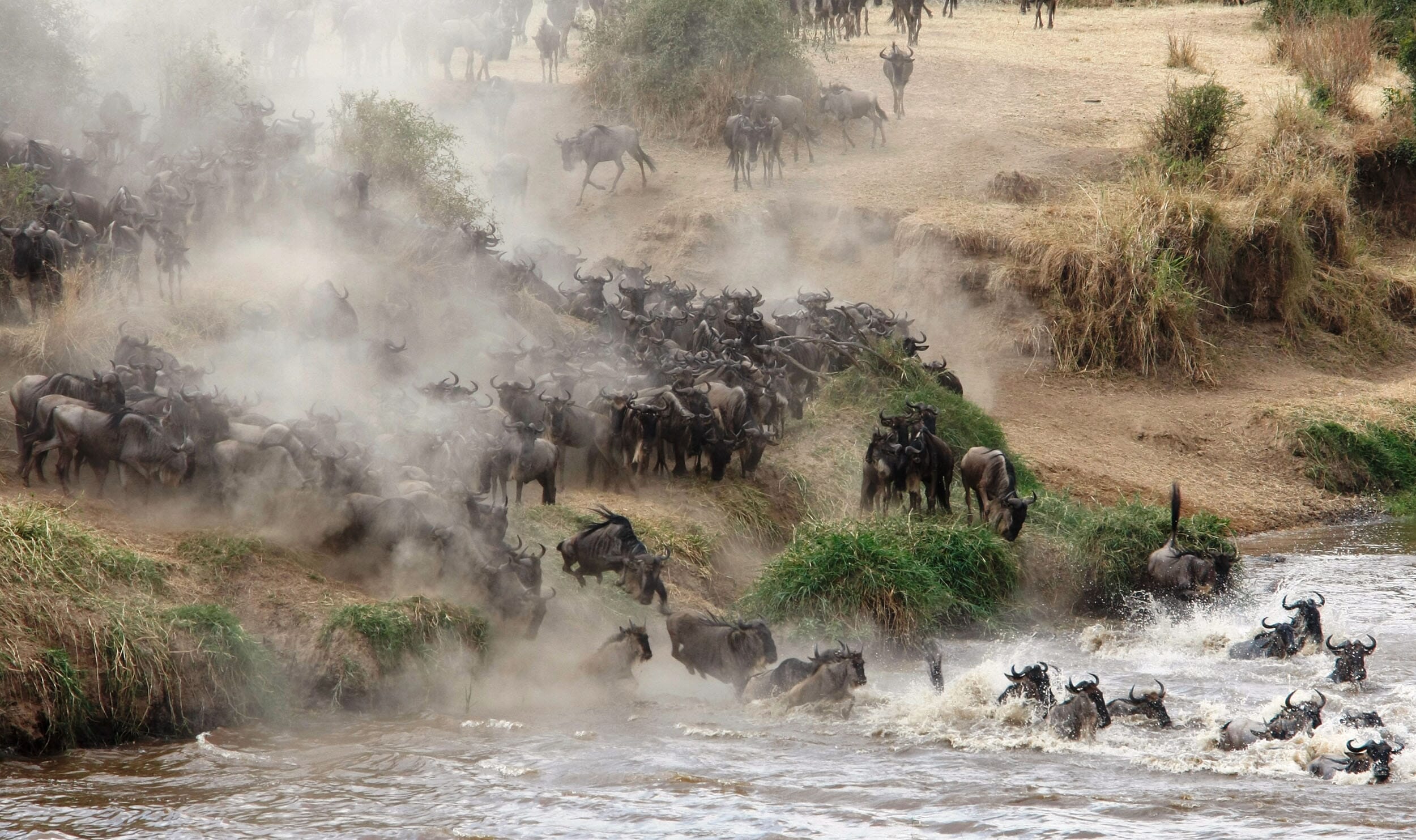
The country is blessed with incredible landscapes and wildlife. In fact, South Africa is home to just about every animal you could hope to encounter on a safari, from cheetahs to hippopotamuses and leopards to wildebeest.
With so many magnificent creatures to see and landscapes to explore, it is only natural that many ask: “When is the best time to go on a safari in South Africa?” while planning a trip. After all, you want to visit during a period when the scenery is in its prime and wildlife sightings are common.
However, the best time to go on a safari in South Africa largely depends on personal preferences. In this article, we break down the key advantages of going on a wildlife adventure in the country during different seasons.
Whether you are a general wildlife enthusiast, a lover of landscapes, or a dedicated birdwatcher, these insights will help you plan the perfect safari experience.
What Is the Best Time of Year to Go on Safari in South Africa?
March to May (Autumn)
March to May is often thought to be one of the best times to go to South Africa for wildlife diversity. March is the final month of the country’s rainy summer season and signals the transition into Autumn.
This means that initially, the bushveld flourishes and the rivers are full, creating the most glorious natural scenery. The sporadic showers begin to dwindle throughout March and the following months, causing the summer foliage to thin and provide excellent visibility.
At this point, it becomes much easier to spot creatures, particularly more elusive ones such as leopards. The animals are also more active in Autumn and are often seen strolling through the landscape.
March to May is also commonly regarded as the best time of year for safari in South Africa for those looking who are also wanting to visit Cape Town. Temperatures hover between 16°C and 25°C, providing pleasant temperatures not just for game walks and drives but trips to Boulders Beach and hikes to the top of Table Mountain.
With so much to see during this period, it’s no wonder why it is often hailed as the best time to visit South Africa for a safari. Not only will you be able to tick off seeing marvellous creatures like elephants, lions and African buffalo, but also explore the bright lights of The Mother City.
June to August (Winter)
If you’re aiming to see the widest variety of animal species possible, June to August is likely to be the best time to go to South Africa for you. This period falls under the country’s winter; you can expect dry days with pleasant afternoon temperatures of around 26°C.
Figures then fall in the morning and afternoon and often sit somewhere between 7°C and 11°C. The majority of the country’s wildlife reserves, such as Kruger National Park, are at their driest at this time of the year, elevating visibility and boosting wildlife viewing opportunities.
You will be able to see many animals gathering by watering holes during this period, including elephants and lions. Considering the bountiful wildlife spotting opportunities on offer between June and August, and the fact that these months coincide with the school holidays, it is often touted as the best time to visit South Africa for safari for families.
Another advantage of visiting South Africa in winter is that the cool nighttime temperatures result in reduced mosquito activity. The only downside to this is that you need to pack more layers for early morning game drives.
July and August mark the onset of the whale-watching season. You may wish to consider extending your safari trip to include a visit to Hermanus in the Western Cape. The town is renowned as the world’s best land-based whale-watching spot.
Here, you can tick off the incredible experience of witnessing these colossal mammals gracefully navigating the azure waters along the Cape coastline.
September to November (Spring)
Seeking the best time of year to visit South Africa for whale watching? Look no further than the spring months of September to November.
This is when the country’s whale watching season reaches its peak, meaning you’ll be able to spot many migrating humpbacks on the eastern coast, and southern right whales arriving in the Western Cape.
The safari scene is also strong between September and November. In fact, one of the most magical things about going to South Africa at this time of year is that lots of wildlife species give birth during this period.
From September to November, visitors have a unique opportunity to witness heartwarming sights, including baby bush babies and African buffalos.
Additionally, this period brings sunny weather and warmer mornings compared to the previous months. This makes early game drives and walks all the more enjoyable. By November, rain levels increase, leading to denser vegetation.
While this can make it slightly more challenging to spot creatures, it also brings additional benefits, such as injecting vibrant colours into the bushveld and attracting the first migratory birds. Look out for notable avian arrivals like the European Bee-Eater, Yellow Wagtail and Steppe Buzzard.
December to February (Summer)
South Africa enters its rainy summer season in December. The increased rainfall brings many of the country’s game reserves to burst into life, with colourful vegetation carpeting once-arid plains. While this creates stunning natural scenery, it can also pose a challenge for wildlife spotting.
Moreover, the increased rainfall prompts the opening of numerous water holes across the country, leading to the dispersion of herds. For this reason, many do not consider December the best time to go to South Africa for a safari.
That being said, Kruger’s private game reserves still offer spectacular wildlife viewing opportunities during this month. Timbavati, for example, is a great destination to head to during this time of year.
January brings hot humid temperatures and rainfall tends to increase. You are likely to experience heavy showers in the afternoon, while the mornings and evenings tend to be drier and ideal times to head out on safaris. As in December, the verdant bush can make it more difficult to spot wildlife.
However, one of the best things about visiting South Africa during this period is that its blissfully warm evenings provide perfect conditions for enjoying sundowners. In fact, this month is particularly renowned for its stunning sunsets, which often showcase magnificent blends of scarlets and fuchsia taking over the sky.
As we move into February, the country edges towards its Autumn season. This month is also quite wet, with downpours often taking place in the afternoon. Temperatures remain high, with figures of around 32°C and high humidity.
Mornings and evenings tend to be drier and ideal times to go on safari. Spotting creatures can be challenging amid blooming flowers and dense vegetation. However, it’s not all doom and gloom, as many consider this period to be one of the best times to visit South Africa for birding.
You’ll see many birds in full plumage and migratory species looking very settled. Some of the most exciting avians to watch out for include the vibrant lilac-breasted rollers, majestic African fish eagles, and the distinctive southern ground hornbill.
When Is the Best Time to Go to South Africa for a Safari?
After learning about what each month offers, you might still be wondering, ‘When is the best time to visit South Africa for me?’. Ultimately, it boils down to a matter of personal preference.
Best Time to Go on a Safari in South Africa for Wildlife and Trips to Cape Town
The best time to go on a safari in South Africa for those looking to see a wide range of animals and visit Cape Town is from March to May. With pleasantly warm temperatures and minimal rainfall, the weather conditions are ideal for exploring the attractions of the Mother City and embarking on wildlife adventures.
Best Time to Go on a Safari in South Africa for Wildlife Spotting
June to August, on the other hand, is generally considered the best time to go on a safari in South Africa for wildlife spotting. This period marks the country’s winter season, when many wildlife reserves are at their driest.
The minimal rainfall results in sparse vegetation which makes it easy to spot all of the species congregating by the watering holes. For this reason, June to August is often hailed as the best time for safari in South Africa for those keen on maximising animal sightings.
Best Time to Go on a Safari in South Africa To See Newborns and Go Whale Watching
September to November is the ideal period for those seeking sun and an opportunity to witness newborn wildlife. It’s also an excellent time for whale watching along the eastern coast and in the Western Cape.
Best Time to Go on a Safari in South Africa for Bird Lovers
Finally, December to February is the best time of year for a South African safari for those who are interested in birding. Visitors during this period will encounter an incredible array of unique avian species.
What Animals Do You See on a Safari in South Africa?
Curious about the wildlife you might encounter on a South African safari? Explore some of the country’s most magnificent creatures below:
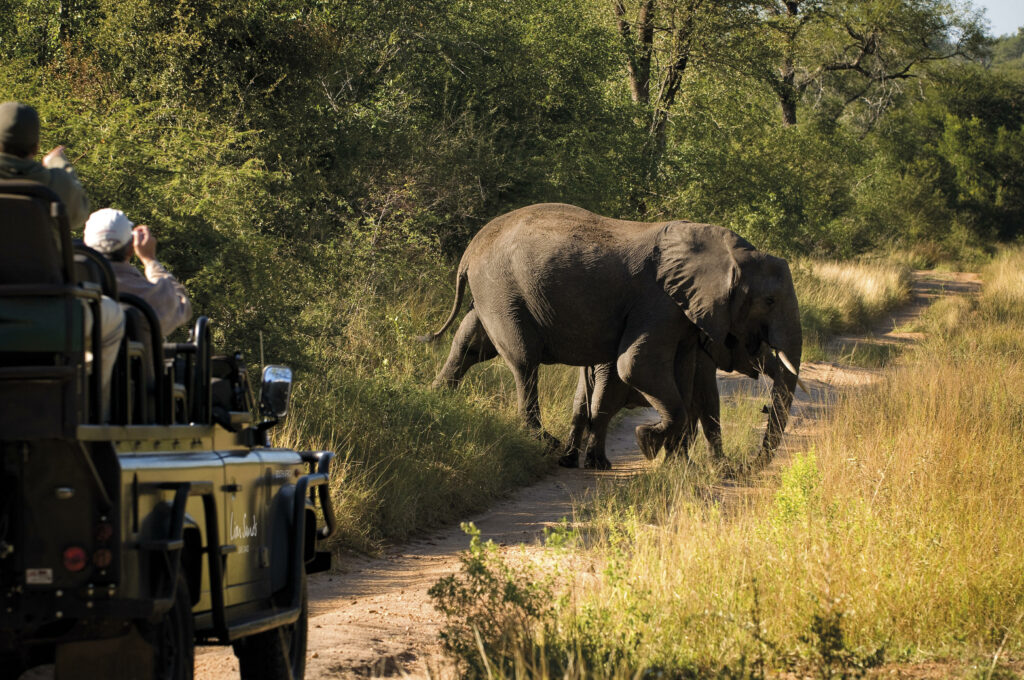
- African Elephant – majestic and enormous, elephants are a common sight in many South African reserves and national parks.
- African Lion – one of the “Big Five,” lions are among the most sought-after animals on safari, and South Africa provides ample opportunities to see them in action.
- African Cape Buffalo – Cape buffalo are formidable creatures often found in South Africa’s woodland savannahs.
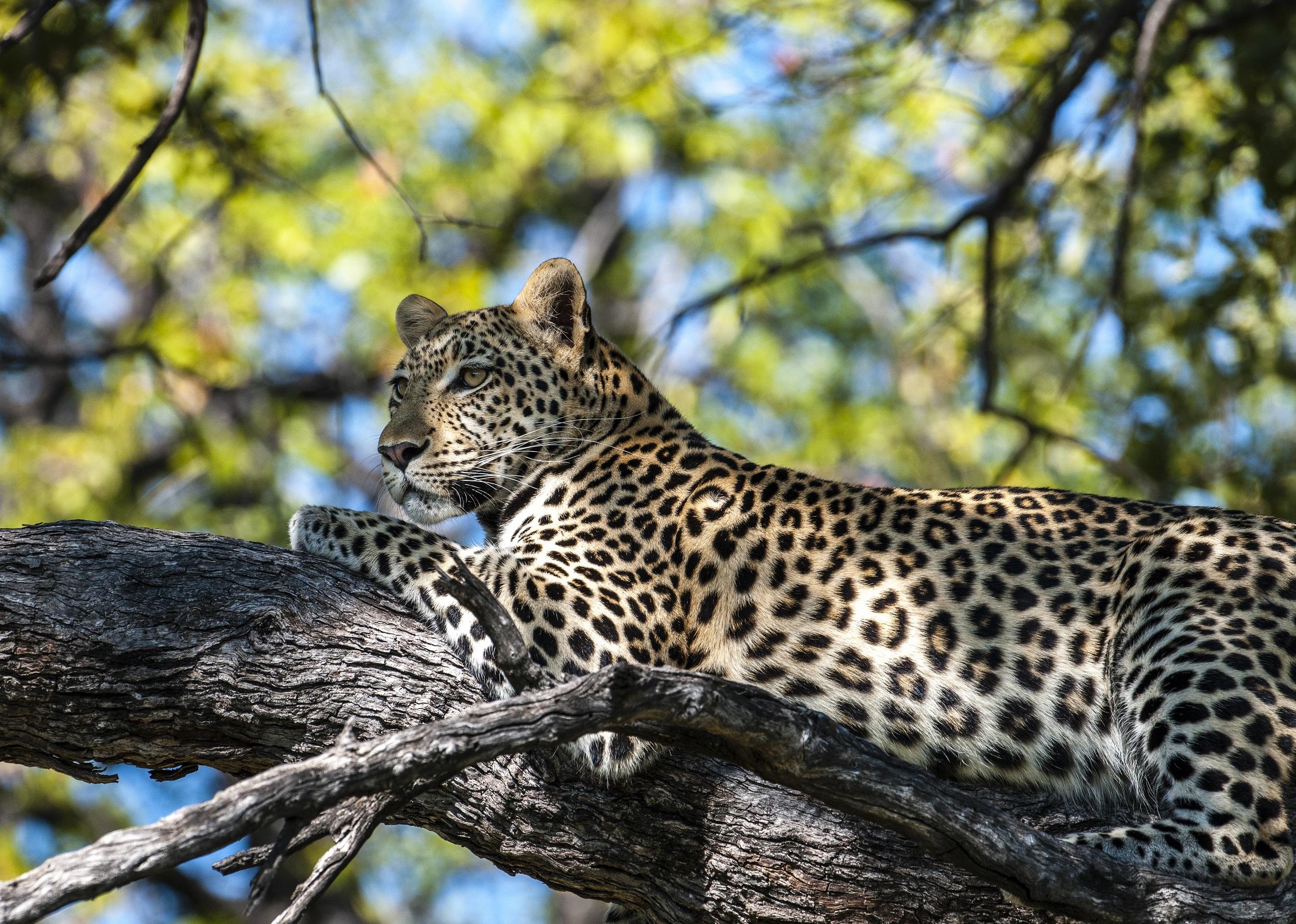
- Leopard – the elusive leopard, known for its stealth and beauty, can be spotted in various habitats across South Africa.
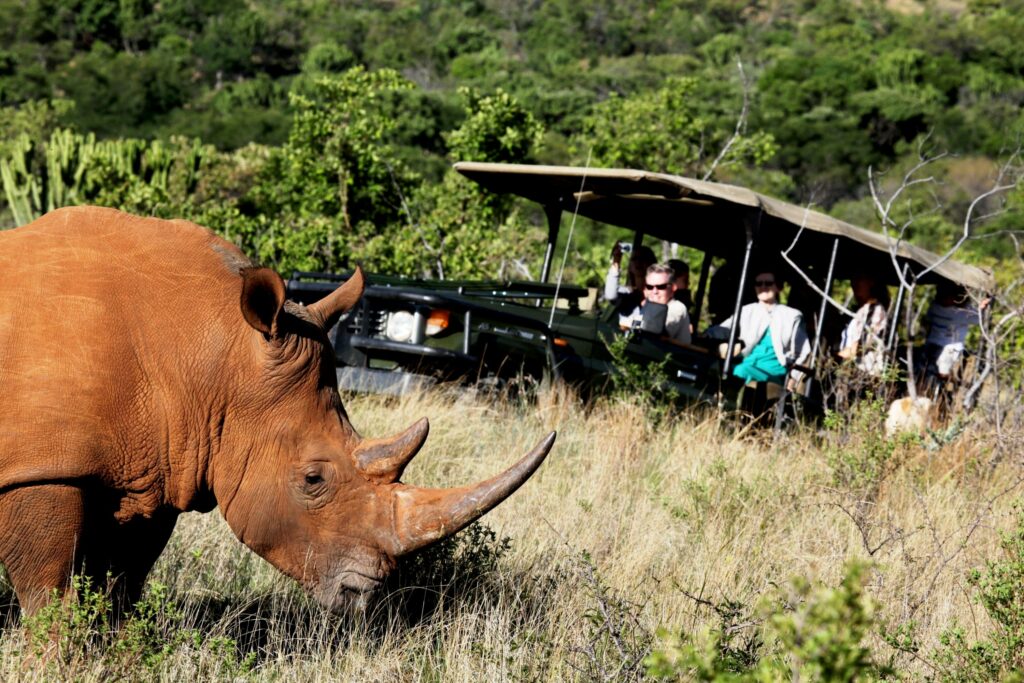
- Rhinoceros – both black and white rhinos can be found in South Africa. In fact, the country is home to one of the largest populations of these creatures in the world.
Summary
Serving up unspoilt landscapes and extraordinary wildlife, South Africa is a wonderful destination for a safari escape. Whether you choose to visit during the lush greenery of the summer or the dry days of winter, you are in for a sensational adventure year-round.
Planning a safari trip to South Africa? Our itineraries and accommodations are perfect for travellers wanting to uncover the unique wildlife in this wonderful corner of the world. Take a look at our selection or contact us about booking your dream South African safari.
Some images used in this blog are the property of our partners. Please contact us for more details.
The Best Places to Visit in Namibia
Nestled in Africa’s South Western corner, Namibia stands out for its truly unique range of landscapes. The treacherous Atlantic coast laps Namibia’s Western border, the colossal sand dunes of Sossusvlei rise out of the South, whilst the cosmopolitan cities of Swakopmund and Windhoek thrum with energy.
Touching down, you will encounter this diversity first-hand travelling into Namibia’s remotest corners. Take to the road on a self-drive road trip, or hop into your own Cessna to witness the true vastness of the country from the sky. From horseback, 4×4, quad bike to hot air balloon, families can explore by every mode of transport you can think of.
With such a diverse array of landscapes and destinations, you’d be forgiven for feeling a little intimidated by the prospect of planning a family safari to Namibia. To provide inspiration and some top Coral Tree tips, we have put together a list of our must-see places to visit in Namibia.
1. Damaraland
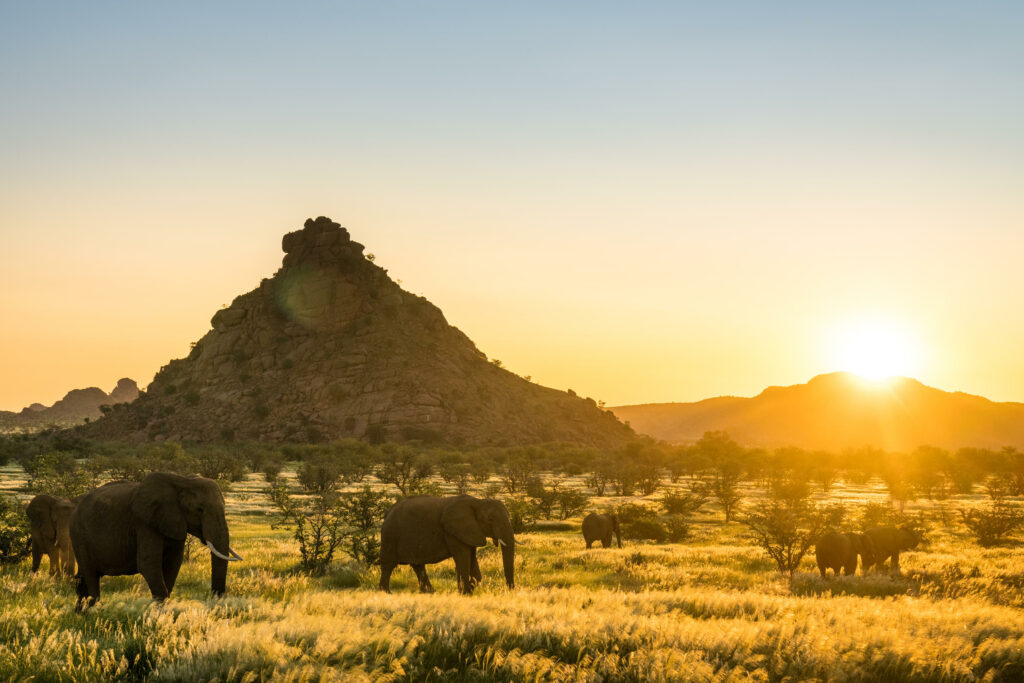
A comprehensive Namibian family safari would be incomplete without an exploration of the underexplored Damaraland. This remote region boasts breathtaking landscapes and forms Namibia’s cultural heart, home to the country’s most extensive rock art collection as well as the nomadic Damara people.
Formerly designated as the Damaraland by the apartheid-era government of South Africa, the region was combined with the Kaokoland to the north, and now forms part of what is today known as the Kunene Region.
Bookended by Brandberg Mountain – Namibia’s tallest – and the quaint settlement of Sesfontein – the Damaraland boasts some of the country’s most spectacular landscapes. The rocky mountains of Spitzkoppe attract hardcore rock climbers wanting to scale its 1728m peak – sometimes referred to as the ‘Matterhorn of Africa’ – as well as family travellers drawn to its uniquely rounded shapes. Whilst the panoramic views of the remote Messum Crater, formed by a collapsed volcano, can be explored on rugged footpaths.
The primary attraction drawing families to Damaraland is its authentic San/Bushman rock art at various sites. Among these, the renowned White Lady painting on Brandberg Mountain stands out as the most well-known. Whilst, Twyfelfontein, recognised as a World Heritage Site, boasts over 2,000 rock engravings portraying scenes of animals and hunters, often depicting a spiritual realm encountered by shamans in trance, solidifying its status as a globally significant rock art site.
An underrated wildlife area, the ‘concession areas’ of the Damaraland limit tourism to preserve its game-rich landscapes. Home to one of Africa’s largest populations of free-roaming black rhinos and Namibia’s famous desert elephants, families could also be lucky enough to spot a lion, hyena, or leopard in this region too.
Many of the Damaraland’s camps are extremely remote, taking quite a few hours to reach them by road, so we suggest staying in the area for at least three days, not least because of the plethora of activities on offer here.
2. Etosha National Park
Only a few hours drive to the west, lies the acclaimed Etosha National Park – the jewel in Namibia’s wilderness crown and one of Africa’s best safari destinations. Spanning over 22,000km2 and named for the ginormous salt pan it rests on, the ‘Great White Place’ is an essential destination for any family safari to Namibia.
The varied environment of the park lends itself to an abundance of game. The areas of denser vegetation are home to some of Africa’s largest elephants, thanks to the unique nutrients found in the ground, and families can spot giraffe, wildebeest, kudu as well as the two different types of resident zebra – the Common Plains zebra and its rarer relative the Hartmann’s Mountain Zebra – on game drives throughout the park.
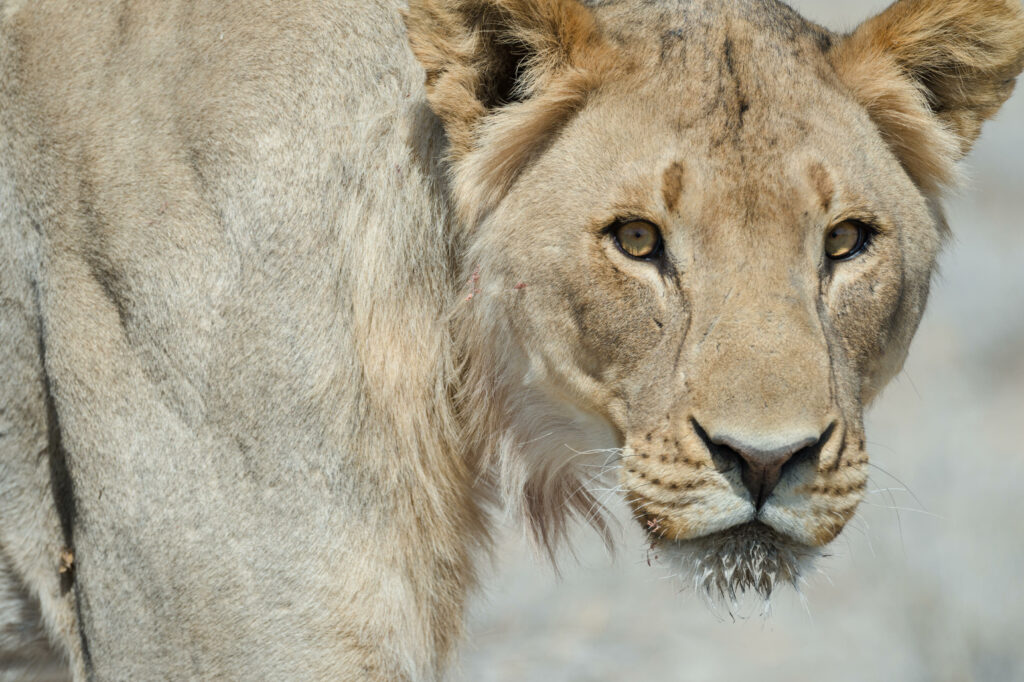
One of the world’s last wild lion strongholds, the park has been named as a critical landscape for global lion conservation, and remains as one of the best places to spot prides roaming and hunting in their natural habitat.
With over 340 bird species spotted here, Etosha is a mecca for some of the best birding in Africa. Families can witness the world’s largest bird, the Ostrich, sprinting across its plains whilst the heaviest flying bird, the Kori bustard, swoops down on its prey. Hardcore birders will especially love Etosha’s rainy season – from November to April – as clouds of flamingos flock to the flooding salt pan.
Our Coral Tree tip for Etosha is to base your game drives – whether self-drive or guided – around visits to Etosha’s famous waterholes, including Nebrownii, Okaukuejo, Rietfontein, Goas, Kalkheuwel and Namutoni. During the dry season, whilst water is increasingly sparse, multiple animal species congregate creating incredible predator and prey encounters.
3. Sossusvlei
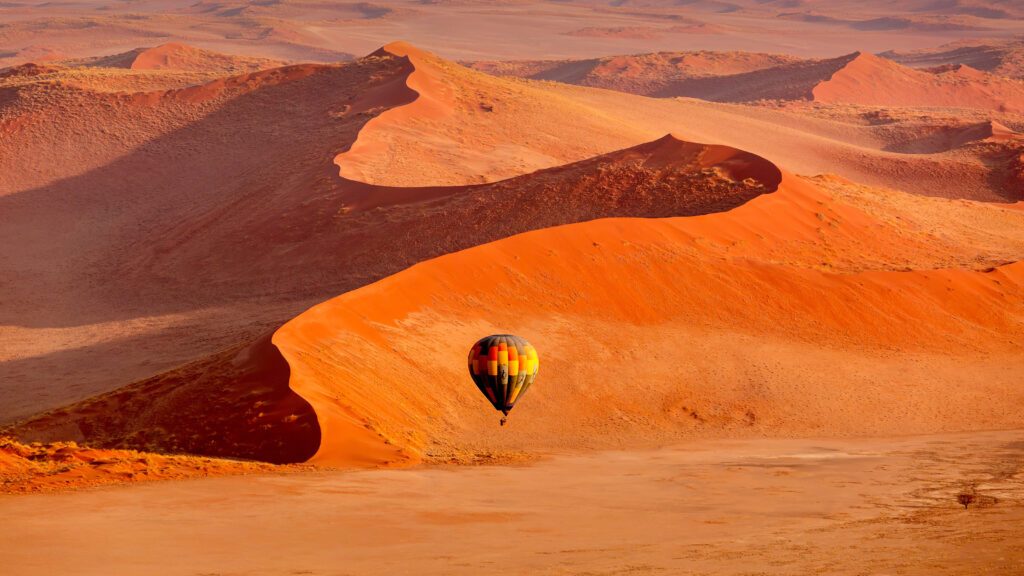
Sossusvlei – ‘Dead Marshes’ in Afrikaans – refers to an ancient salt and clay pan surrounded by some of the oldest and tallest sand dunes in the world. Tucked into Namibia’s vast Namib-Naukluft National Park in the arid south-west, it is one of the most photographed places in Sub-Saharan Africa and a must-see destination for a family safari.
What will most strike you when you first drive into Sossusvlei is how its dunes burn red, pink and orange during the spectacular desert sunrise. This phenomena is actually due to the tiny flecks of iron found in the sand, which have slowly oxidised over the years, becoming an ever darker red colour. The darker the dune you spot, the older its age!
And what will soon become apparent is that this is a very old desert, with some experts estimating that it is up to 55 million years old. Rivalled only by the Atacama Desert in Chile for its age and aridness, families will feel like they are walking backward through time as they stroll around the ancient landscape.
What is even more remarkable than the desert’s age is its inhabitant’s ability to survive in this extreme environment. Almost completely barren, the Namib Desert receives less than 10mm of rain annually making it almost impossible for most wildlife to survive, or so you would think. There are pockets of life everywhere. Salsola shrubs, an unusual melon native to the desert, are dotted all over the nearby Deadvlei salt pan, sustaining themselves solely on the morning mist rolling in from the distant Atlantic. The desert is also home to the Oryx, a large type of antelope who survive by cooling their blood before it enters their brain, and even the desert-adapted lion.
To explore this unique landscape, families can opt for a range of options. One of the best places in the world to take a hot air balloon flight, you can witness the truly vast scale of the landscape whilst enjoying the peaceful serenity of motorless flight. Whilst game drives through the park are perfect for spotting the native prides of lions and wandering oryx.
Families should also make time for a guided walking safari to learn about the smaller flora and fauna of this unique environment, before taking on the challenge of scaling the largest dune – aptly named ‘Big Daddy’.
4. Skeleton Coast
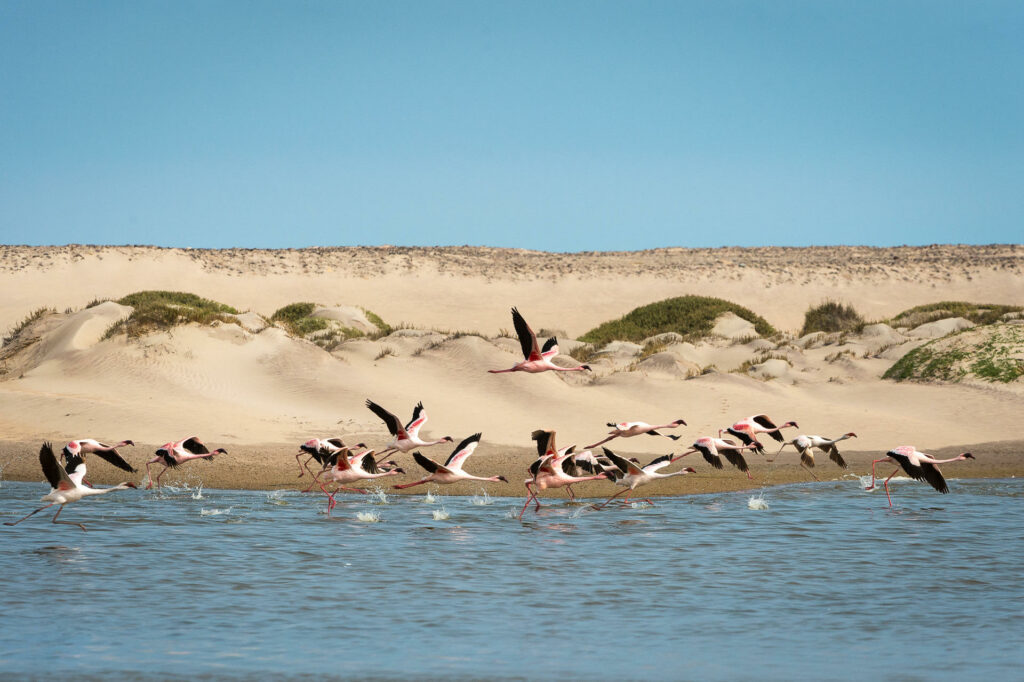
The Skeleton Coast – so named for its proliferation of shipwrecks – consists of a vast expanse of dunes colliding with the rugged Atlantic Coast on Namibia’s Western shore. Known as As Areias do Inferno (The Sands of Hell) by early Portuguese sailors who knew what fate awaited wrecked colleagues, the area maintains its sense of wilderness and exploration, perfect for an adventurous family safari.
This coastline’s vast remoteness is what makes the area truly unique. 20,000 sq km of empty dunes stretch from Sandwich Harbour, south of Swakopmund, to the Kunene River, forming one of the most inhospitable areas in the world’s oldest desert.
The Skeleton Coast’s sparsity of population, as well as Namibia’s certification as a Gold Tier International Dark Sky Reserve, the first and only one in Africa, make it one of the best places on earth for stargazing. Whether you are an avid hobbyist or have a fleeting interest in astronomy, the Skeleton Coast should be at the top of your list.
The pristine environment of the coast makes the Skeleton Coast an attractive destination for families looking for a real taste of the wild, especially as attempts to traverse this vast landscape have often resulted in another phenomena of the area – the almost 1000 shipwrecks littering the coastline. Falling victim to the thick coastal fog, arising from the chilled air of the Benguela Current meeting hot desert winds, these wrecks loom ominously in the Atlantic swell.
The harsh environment has also lent itself to some truly innovative adaptations to survive, and experienced guides can point out the unique flora and fauna on walking safaris. From the darkling beetles that lie on the crests of dunes during foggy days allowing drops of water to roll down to their mouths, to the geckos licking moisture from plants and stones.
Contrary to many families’ expectations of a safari holiday, the Skeleton Coast offers a bustling population of cape fur seals, Heaviside’s dolphins and even green turtles, all an exciting sight on local kayak and boat excursions. And thrill seekers can surf the Atlantic swell, bash the dunes on quad bikes or take to the air in a light aircraft.
5. Swakopmund
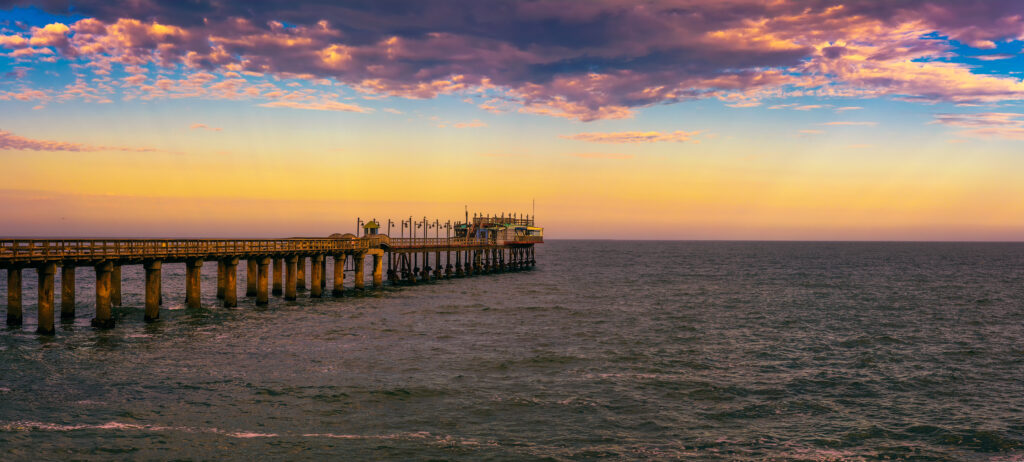
An essential stop-off for any Namibia safari, Swakopmund, situated on its dramatic Atlantic coast, offers a refreshing burst of urban culture as well as some of the best outdoor pursuits in the country.
Families should begin their Swakopmund adventure with a guided tour to explore the elegant art nouveau architecture of the town and learn about its rich history. Founded in 1892 as the main harbour for German South-West Africa, the town has transformed from a colonial outpost into a seaside resort, maintaining its historic charm while offering an incredible range of activities, making it a popular destination for both locals and tourists.
Make time to visit the distinctive Swakopmund Museum, which offers a comprehensive look at Namibia’s varied history. Located at the foot of a lighthouse, the site is steeped in history, even occupying the site of an old warehouse destroyed by a British warship’s ‘lucky shot’ in 1914. Look out for the People of Namibia exhibit which tells the story of Namibia’s many different ethnic groups, from the Herero to the Himba.
As well as being a destination in itself, the town’s surroundings offer a real playground for thrill-seekers. Families can quad bike, sandboard, or even ski around the huge dunes of the Namib, or opt for a more relaxed guided excursion to the Moon Landscape and Swakop River Canyon. For a water-based adventure, families can take a catamaran or kayak tour to spot the cheeky cape fur seals – who regularly try to mount the boats – dolphins, leatherback turtles and even whales depending on the time of year.
Offering more activities than you could hope to do in a single stay and a revitalising dose of the urban, Swakopmund is always worth a visit on a family safari to Namibia.
Summary
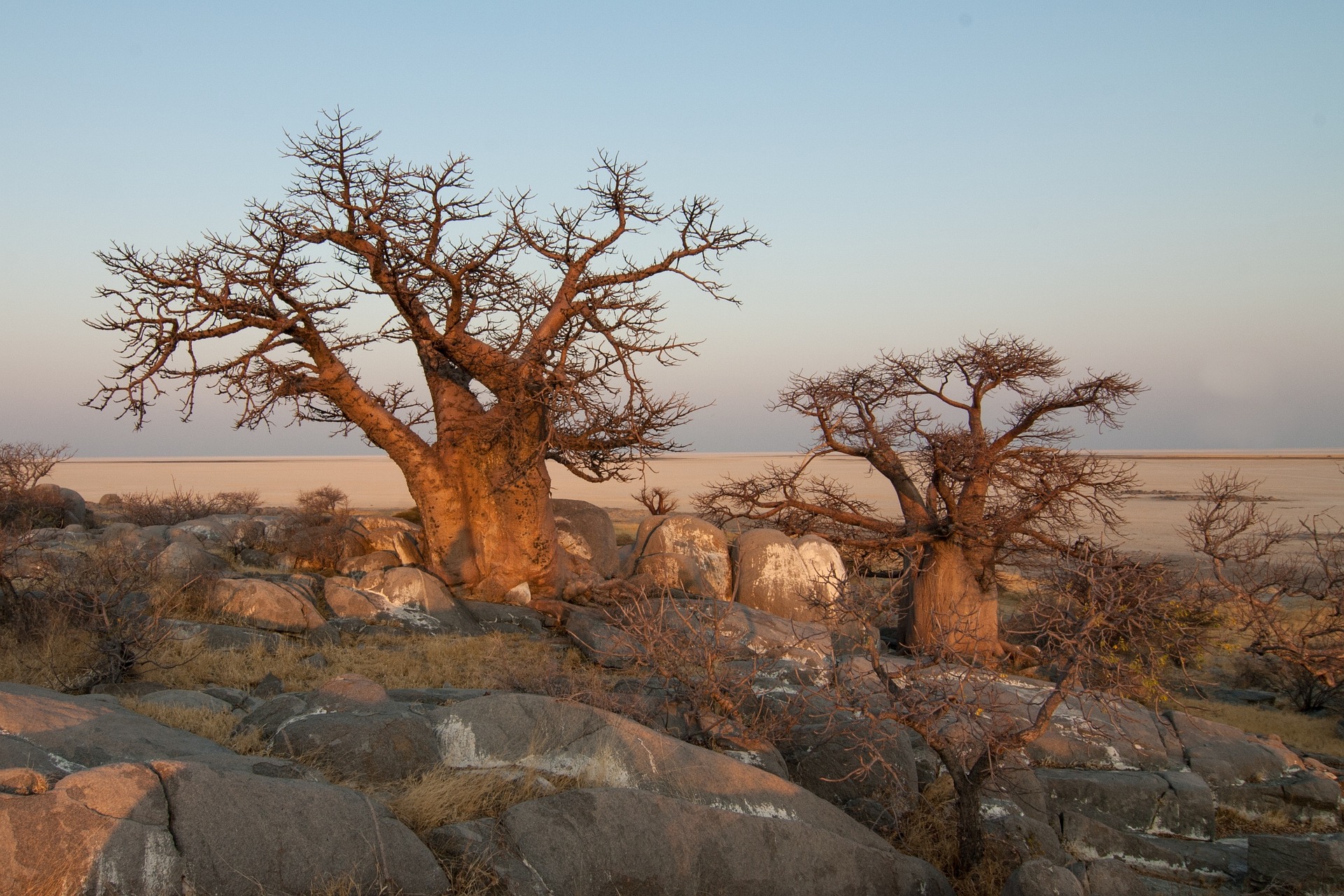
Namibia is a true land of contrasts. From the ethereal beauty of Sossusvlei to the untamed wilds of Damaraland, a family safari to Namibia is an intrepid adventure through some of Africa’s most varied and spectacular landscapes.
A Namibia family safari can take you from witnessing wild lions stalking their prey in Etosha to an ascent of the rocky peaks of the Spitzkoppe, or even to an elegant seafood restaurant in Swakopmund.
A matter of weeks in Namibia can grant your family a lifetime of experiences and Coral Tree Travel are on hand to make sure you visit the must-see sights as well as the hidden gems no one knows about, all the time making sure your trip runs seamlessly.
What are you waiting for? Get in contact with the travel experts at Coral Tree to start planning your luxury family adventure and turn dreams of seeing these glorious creatures into a reality. We have a fantastic range of safari experiences and packages to choose from.
Some images used in this blog are the property of our partners. Please contact us for more details.
A Namibia Family Safari Holiday
A Namibia Family Safari Holiday
A North London family recently did a wonderful Namibia family safari with Coral Tree. Below is a first person account of their trip.
Our family safari in Namibia was a wild adventure filled with unexpected encounters and memorable moments. From traversing the never-ending expanses of the Namib to the spectacular wildlife of Etosha, the trip is sure to be one we’ll never forget.
Arriving in Windhoek
Beginning our journey in vibrant Windhoek, we were swiftly met by a local representative who acquainted us with the local area and accompanied us to the Windhoek Luxury Suites. After the long journey a bit of rest and relaxation by the wood-decked pool was a welcome treat, and we ended the day with a delicious dinner at the nearby Stellenbosch Wine Bar. Feeling relaxed and recovered, we were ready to embark on our self-drive adventure through Namibia.
The Open Road and Sunrise Balloon Adventures
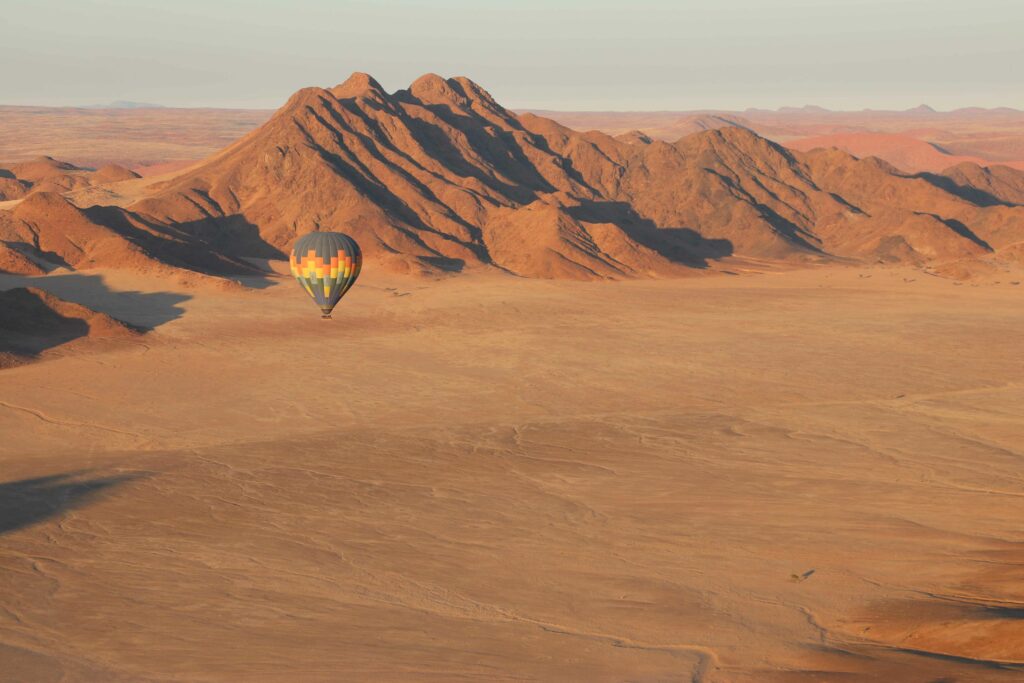
Departing Windhoek with nothing but endless gravel roads in front of you is both a liberating and unnerving experience but we were soon distracted by the spectacular scenery of the Spreetshoogte Pass, regularly stopping to take some pictures.
Pulling into Namib Outpost in the early evening, we were greeted by refreshing cold towels as well as comfortable lodge rooms overlooking the desert and wandering wildlife. The rooms even had sun loungers where you could top up your tan if you so wished!
After an early start, we set off for our exciting morning at Namib Sky. Enjoying coffee, cake and ginger shots as the balloons were assembled, we took off just as the spectacular sunrise peeked over the desert. Flying as a pair means that we got some beautiful shots of the sunrise, the other balloon, the landscape and the animals.
We floated over the mountains and after a breathtaking flight, we were indulged with a delicious champagne breakfast in the middle of the Namib Desert – a real highlight of our adventure!
The following morning, we got up early and our personal guide collected us at the lodge for our excursion to the world-famous Sossusvlei. We visited some of the smaller dunes, learning about the unique geology of the area, before tackling the ginormous Big Daddy dune – one of the largest dunes in the world. After a visit to the small circular valley called Deadvlei, with its spectacular remains of petrified ancient trees, we left Sossusvlei for the next stop on our trip – the unique imperial outpost of Swakopmund.
Seaside Adventures in Swakopmund
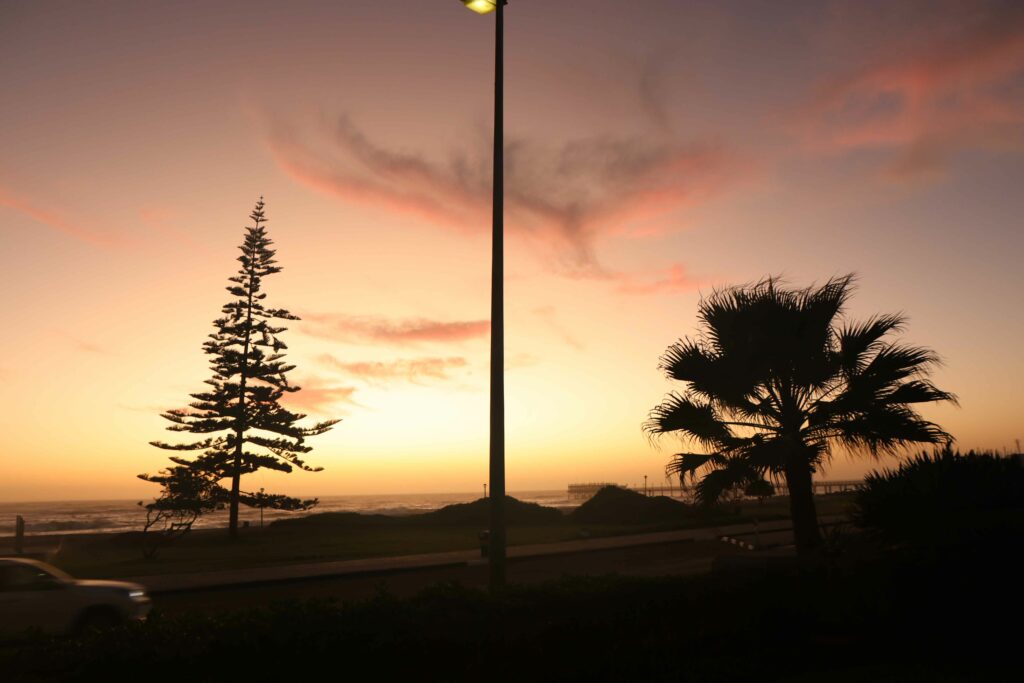
After a well-deserved night’s sleep at our sprawling ground-floor apartment on the Atlantic promenade, our adventure continued and we made our way to nearby Walvis Bay – literally translated as ‘Whale Bay’.
Out on the water in a majestic catamaran, the crew worked their magic, coaxing three playful seals onto the boat. My wife and daughter have both always loved seals, and therefore were thrilled when they got the chance to interact firsthand. And the bay soon lived up to its name with a surprise appearance by a Humpback Whale, making the cruise a truly immersive wildlife experience, perfectly capped off with the simple luxury of champagne and oysters.
To experience the true range that Swakopmund has to offer, we soon departed with our personal guide for a thrilling quad bike tour through the desert. Fun became an understatement as even my initially hesitant wife couldn’t resist the allure of the dunes. Our guide, a veritable desert whisperer, really went the extra mile, uncovering tiny wonders like a Lizard and a Sidewinder Snake. The windy day, while keeping many creatures in hiding, added an ethereal touch to the landscape, with waves of sand cascading over each dune, creating a mesmerising scene we won’t soon forget.
The Ancient Treasures of the Damaraland

Our journey through Namibia continued with a drive to Mowani Mountain Camp, a hidden gem nestled in the heart of the rugged Damaraland. Eager to make the most of our stay, we arrived early, ensuring we had ample time to settle in and savour a refreshing drink while witnessing the breathtaking sunset from the camp’s panoramic viewpoint.
The impressive rooms perched on the mountainside simply blew us away, each featuring a balcony that overlooked the vast plains below. Our daughter even got upgraded to a mini suite in order to be closer to our lodge, and was thrilled with her private pool and outside chill out areas. Little did we know that this upgrade would also introduce us to the delightful world of rock dassies, who seemingly adored the mini-suite surroundings, much to our daughter’s delight.
The following morning brought an exciting wildlife excursion as we embarked on a guided drive with a knowledgeable local guide. After an hour of anticipation, our efforts were rewarded with a majestic sighting of a family of desert elephants, a truly awe-inspiring moment. Our journey continued to the De Riet village, offering us the chance to connect with the local community, purchase exquisite handmade jewellery, and gain insight into their way of life.
In the afternoon, our exploration led us to ancient rock carvings of Twyfelfontein, a Namibian treasure that, despite the challenging hike in scorching 30-degree heat, is well worth the effort.
Wildlife Wonders, Salt Pans, and Luxurious Retreats
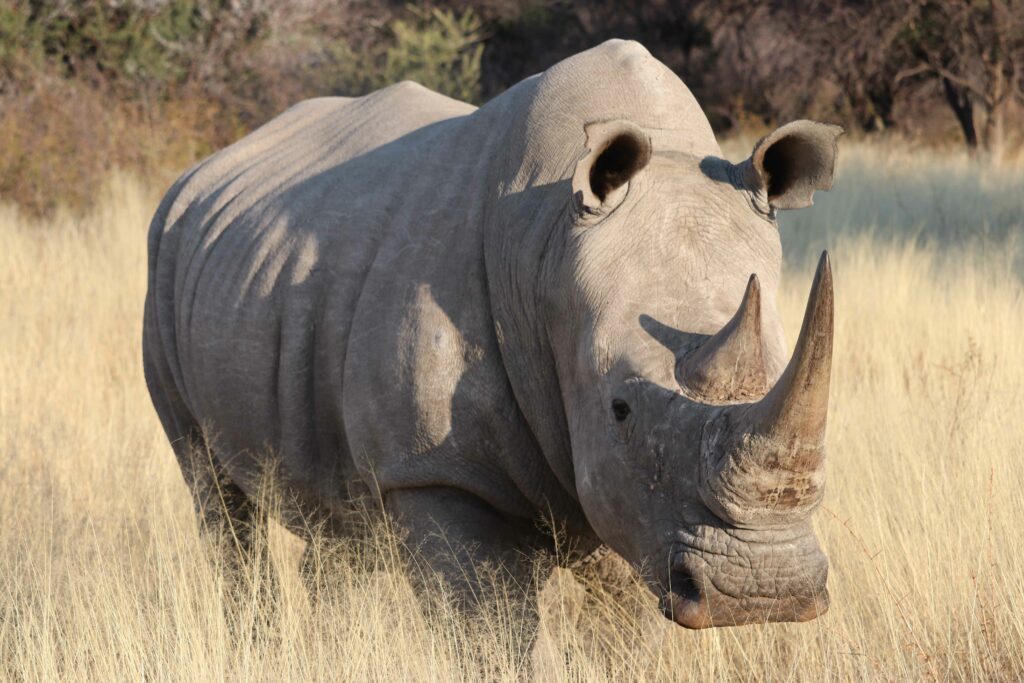
Our time in Etosha National Park was a wildlife spectacle. With the basic charm of Okaukuejo Rest Camp, our chalet balcony offered a front-row seat to elephants, giraffes, and black rhinos drinking at the nearby waterhole. The sunset with the animals’ reflections in the water was truly breathtaking.
Armed with a map marked with waterholes recommended to us, we explored Etosha freely, encountering elephants and zebras by the roadside. It was a truly novel experience to be allowed to drive through a National Park full of huge wild animals without a Ranger with us. And making time to visit the vast Etosha salt pan was a surreal experience that really added to the day, something we’d highly recommend to others.
That evening we retreated to Onguma Bush Camp, a luxurious camp that really elevated our experience. Dining with a view of the waterhole, we marvelled at the animals gracefully passing by, treating us to a spectacular sunset.
The following day, an experienced guide took us back into the Eastern side of Etosha, where rare sightings awaited. From a hyena near the park entrance to two cheetah brothers sunbathing on termite mounds, each moment unfolded like a scene from a wildlife documentary.
Conservation Oasis: Okonjima and Africats

Our family’s trip through Namibia was an incredible adventure, brimming with unforgettable moments. And the thoughtfully organised and curated experiences crafted by Mike and the Coral Tree team definitely ensured that this was the family trip of a lifetime.
As we reflect on the experience, we are sure that we have created family memories that will stick with us forever and we look forward to planning our next adventure!
Request a free consultationSome images used in this blog are the property of our partners. Please contact us for more details.
An Unforgettable Tanzanian Adventure: From Lake Natron to the Serengeti
An Unforgettable Tanzanian Adventure: From Lake Natron to the Serengeti
The Gallagher family recently did a wonderful Tanzania family safari with Coral Tree. Below is a first person account of their trip from Lizzy.
A family trip to Tanzania has been on our bucket-list for years, so it was incredibly exciting to finally get it organised with Coral Tree.
Our journey took us through some of the most breath-taking landscapes I’ve seen, from the other-worldly rocky vistas of Lake Natron to the volcanic forests of the Empakai Crater, and it really created once-in-a-lifetime memories for us.
Lake Natron Camp: A Tranquil Oasis
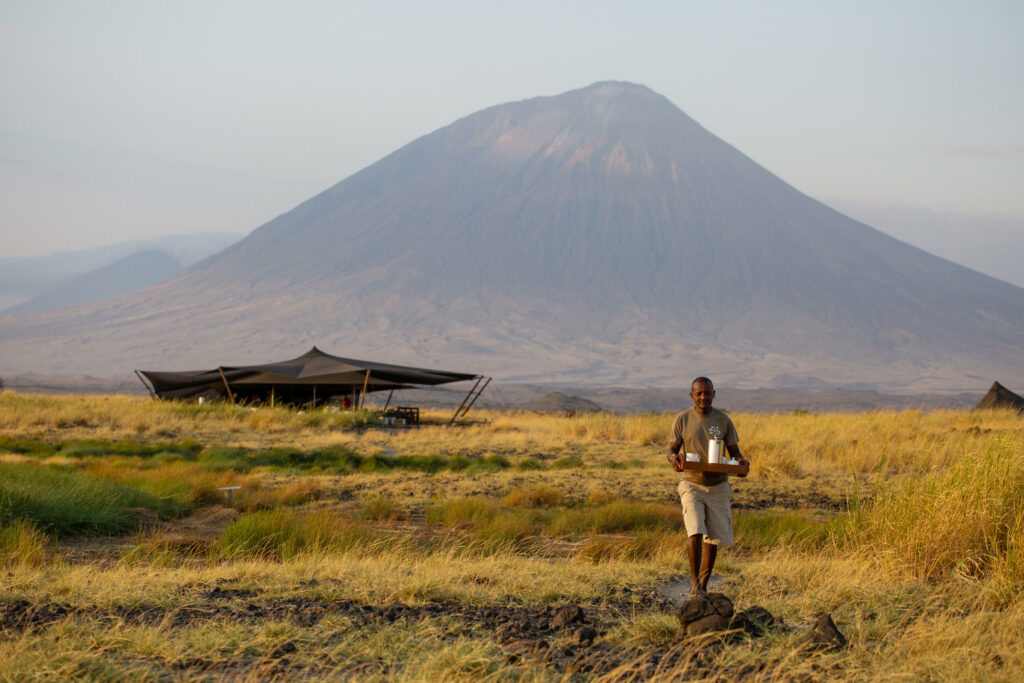
The first thing that struck me about Lake Natron was how impossibly far away you feel from your life at home. Panoramic views of the lake, Ol Lengai volcano towering above, and the wind whistling down the Rift Valley are all a constant reminder of the scale of this incredible environment.
Lake Natron Camp’s specially-designed Bedouin tents blend seamlessly into the environment, and made us feel like we were on a pioneering expedition. However, the impeccable service, sundowners at the riverside and ensuite bathrooms provided a luxurious touch to our stay and the lovely Maasai staff really made us feel at home.
The highlight of our stay was undoubtedly the chance to witness the Great Rift Valley’s mesmerising flamingo spectacle. Flocks of these elegant birds painted the shores of Lake Natron in shades of pink, creating a scene straight out of a nature documentary. We took leisurely walks along the lake, capturing photographs and learning about the distinctions between the Greater and Lesser Flamingos.
The history nerd in me also loved seeing the hominid footprints preserved in the volcanic rock nearby; they are thought to be almost 100,000 years old!
Empakai Crater Hike: Scaling the Heights
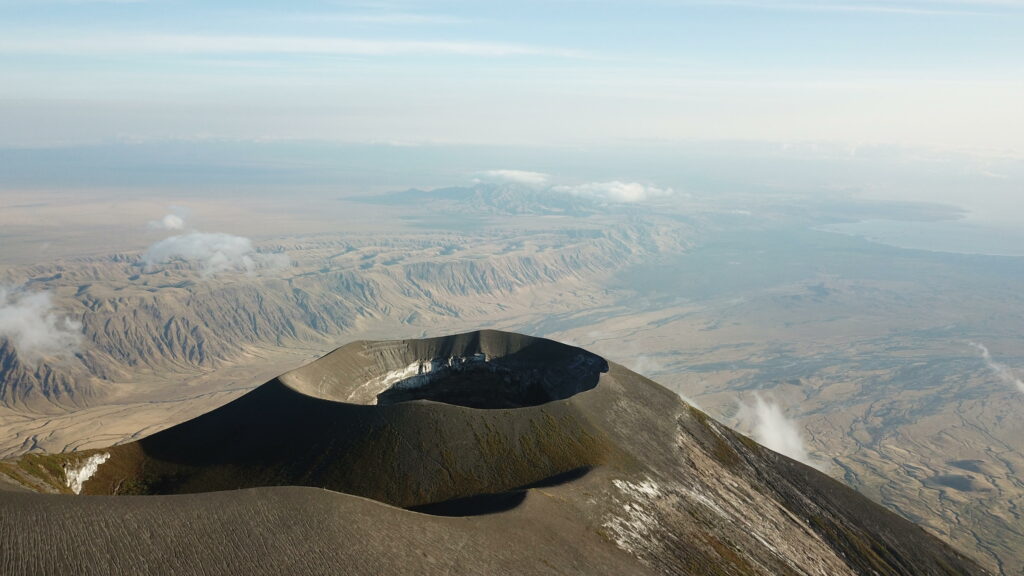
After two days of relaxation, we were ready to tackle our two-day hike up to the Empakai Crater, a collapsed volcano caldera.
This was my favourite part of the trip by far. Hiking up through open slopes of rock and grasslands with spectacular views over Lake Natron and, as we got over the ridge, onto Mount Kilimanjaro was so rewarding and you really felt like you had earnt a drink by the time you reached camp – already set up further ahead!
The second campsite, set in a spectacular spot looking into the Empakai Crater itself was a particular highlight. All put up and dismantled just for us, the made up beds, dining table and freshly prepared food felt really luxurious in such a remote location.
The 400m descent into the crater on our third morning was a memorable journey as we saw monkeys swinging from the trees, and buffalo grazing on the grassy shores of the soda lake. The armed ranger trekking with us and the complete lack of other travellers also really made us feel like we had escaped the tourist trail.
The Ngorongoro Crater: Game-changing wildlife
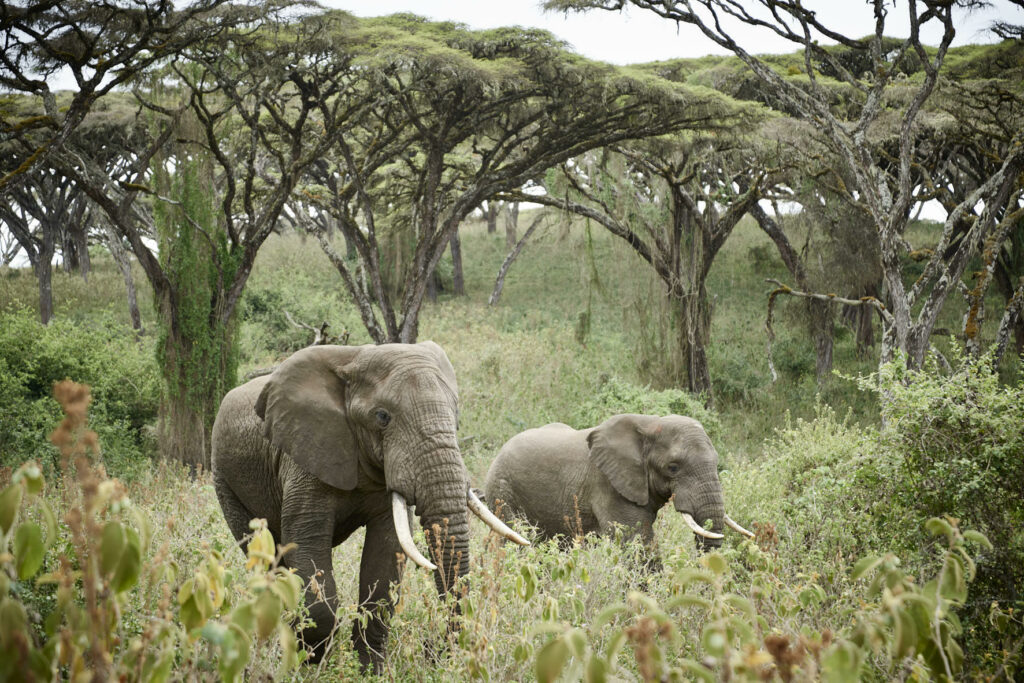
Next stop was the iconic Ngorongoro Crater – the reason we had first considered coming to Tanzania.
Arrival at the lovely Sanctuary Ngorongoro Crater Camp, perched on the edge of the world-famous Ngorongoro Crater, felt like a return to civilization after an intrepid view days. And the camp’s luxurious tents and incredible three-course dinners were a lovely treat.
Descending into the Ngorongoro Crater was like entering a different realm altogether and we were blown away by the sheer density of game here. Every five minutes we were stopping to snap shots of hunting hyenas, sleeping lions and even a distant rhino meandering through the grasses. We were even lucky enough to witness a Serval cat trotting along the track with its kill hanging from its mouth.
Serengeti Kati Kati Camp: Amidst the Great Migration
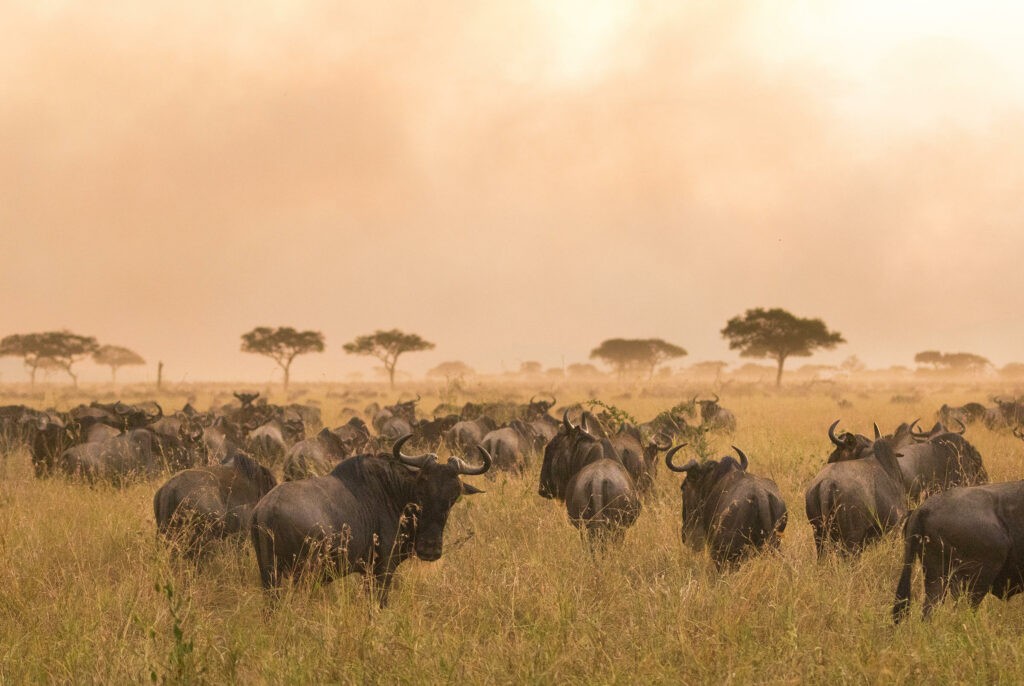
The grand finale of our Tanzanian adventure awaited us at the Serengeti Kati Kati Camp.
The camp’s strategically positioned tents meant that even while relaxing at camp we saw giraffes nibbling at the trees and distant herds of elephants walking through the valley. Particularly memorable was a chatty pride of lions who came past the camp one night, roaring to each other as I lay in my bed a little nervously!
On one of the mornings of our stay we were lucky enough to do a hot air balloon safari – organised as a surprise by my parents – and I can honestly say it was one of the most breathtaking things I have ever experienced. Regardless of the game you manage to spot, the tranquil silence of floating along just as a spectacular African sunrise peeps over the horizon is truly magical.
On our final day, our guide advised us that we should head over to the Western side of the park to try and spot the Wildebeest migration in action. After an hour of driving, and some lion-spotting along the way, we quickly emerged into a noisy sea of brown as thousands upon thousands of wildebeest passed us on their well-trodden path north. It is hard to put into words the mesmerising scale of the migration and hours flew by as we watched the incredible sight of these animals determinedly marching onwards. It really brought the scale of Africa and its wildlife home to me, and is certainly something I will never forget.
Mike and Coral Tree Travel helped us craft an itinerary that was really beyond all of our imagination and helped us escape the oversold tourist trail so that we felt like this trip was really personal to us. At every turn Mike had worked behind the scenes to make sure our trip ran like clockwork and to create special moments – especially the birthday celebrations at the Crater Camp for my mum’s 60th birthday.
And if this trip did leave us with any lasting thoughts, it is that we will be back!
Request a free consultationSome images used in this blog are the property of our partners. Please contact us for more details.
What Is the Best Time of Year to Go on Safari in Botswana?
A wild paradise home to many of the world’s most magnificent creatures, there truly is no bad time to go on a safari in Botswana. No matter the month, you will be treated to glorious scenes of nature at its finest.
Prepare to discover spectacular landscapes where you will cross paths with the ‘Big Five’, otherwise known as lions, leopards, elephants, black rhinos and buffalos. Each month of the year promises a very special wildlife experience, with different creatures and topography to be seen depending on when you visit.
To help you plan the best safari in Botswana, we have shared advice on the best times of the year to explore this beautiful country, along with information on the seasons and where to visit.
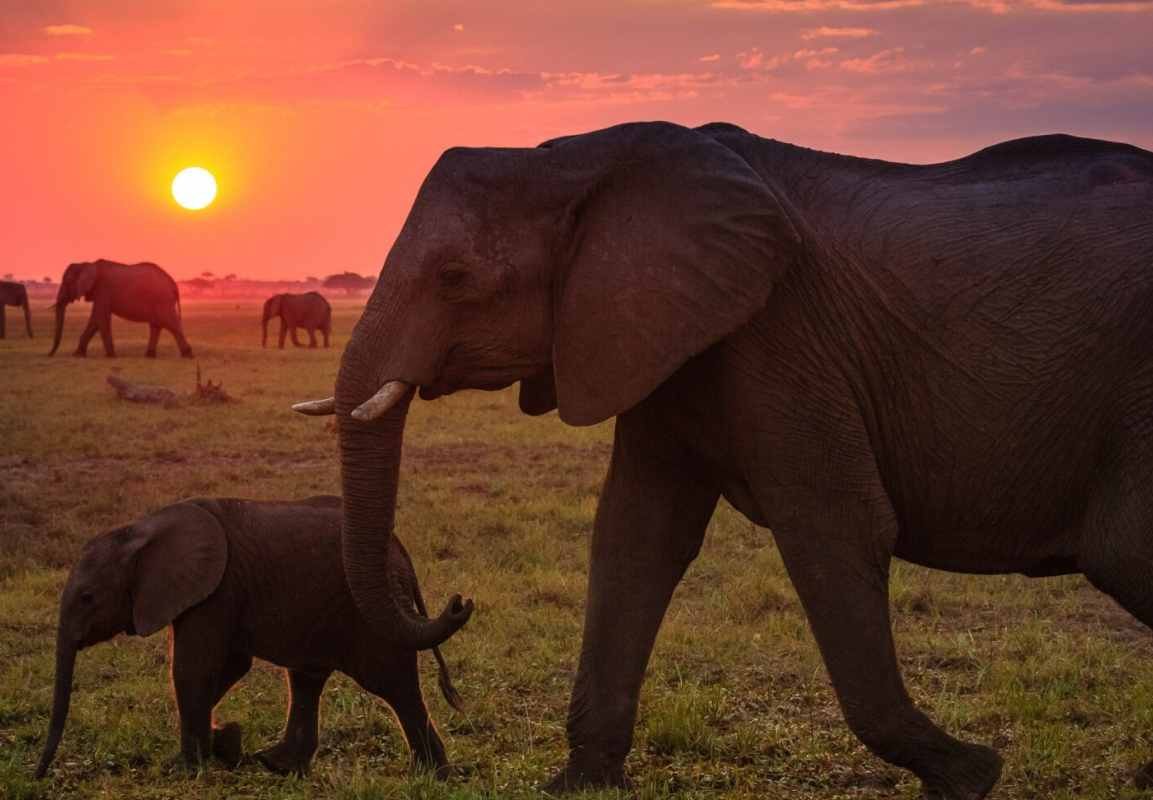
What Are the Seasons in Botswana?
Botswana has only two distinct seasons. The first of which is summer, otherwise known as the green season. This period begins in November and runs through until April. The second season is winter which is also called the dry season. It lasts from May to October.
Each of these periods has distinct weather conditions that attract different wildlife species and lead to dramatic transformations in the landscapes.
Where to Safari in Botswana
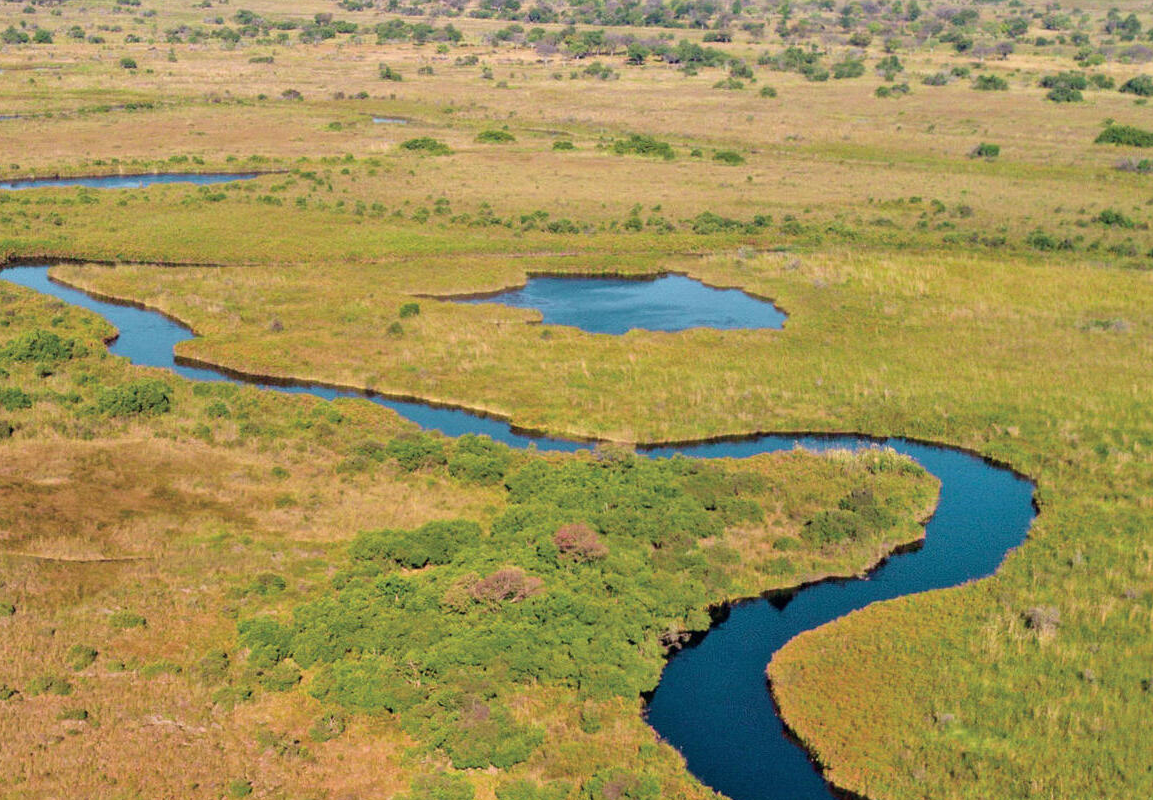
Many people ask “Where are the best places to go on safari in Botswana?” ahead of their trip. Thankfully, this African paradise is home to a wealth of radiant wildlife parks. The landscapes range from vast inland deltas home to lions, giraffes and elephants, to the largest salt plains in the world where you will find zebras, springboks and wildebeests. We have listed some of our top recommendations below.
Chobe National Park
Commonly considered one of the best places to safari in Africa, Chobe National Park is a magnificent place to explore. Here you will find rare species including African wild dogs, cheetahs and a wealth of fascinating bird species.
Central Kalahari
Central Kalahari is certainly one of the best places to go on a safari in Botswana. In this vast, arid landscape, you will encounter the magnificent black-maned Kalahari lion, along with packs of brown hyenas and a spectacular wildebeest and zebra migration.
Linyanti Wetlands
For those looking for a unique safari experience in Botswana, look no further than the Linyanti Wetlands. A captivating sight, the pristine wilderness has an open border alongside the Chobe National Park and boasts diverse habitats resided in by everything from lions to hippopotamuses and roan antelopes to wild dogs.
Okavango Delta
The Okavango Delta is one of the most magical destinations for luxury safari holidays in Botswana. The site marks the spot where the Okavango River splits into several strands, opening to form an oasis home to incredible wildlife species.
Moremi Game Reserve
The Moremi Game Reserve is a completely unspoilt oasis. It has been carefully protected and preserved by the BaTswana people since 1963. It is here that you will find many of the most highly endangered species of large mammals including white rhinoceros, black rhinoceros and cheetahs.
Makgadikgadi Pans
The Makgadikgadi Pans are the largest on the planet, spanning an area of over 30,000 km². An extraordinary landscape, visitors will be greeted with endless expanses of salty terrain home to meerkats, zebras and wildebeest. It is here that you will also find many of the best safari camps in Botswana.
What Is the Best Time of Year to Go on Safari in Botswana?
While there is truly no wrong time to go on a safari holiday in Botswana, each month of the year promises a very unique experience. Be sure to select the right period to suit your adventure style.
January to April in Botswana
January to April is considered by many to be the best time of year to go on safari in Botswana. As this period sees fewer tourists, those visiting during this month can experience quieter parks and more affordable prices compared to the peak season.
The landscapes of the parks are also greener as it is the wet season which attracts a wealth of bird species. What’s more, many newborn animals can be seen at this time of year.
However, the smaller crowds and unique wildlife experiences come at the price of unpredictable weather. Rainfall can extend for long periods during the months of January and February, while the heat can be stifling, with average temperatures of around 32.5°C.
February stands out as a particularly exciting time to visit. While this is the country’s rainiest month of the year, it also marks the period when the zebras migrate from the Boteti River to the Makgadikgadi and Nxai pans, which is an extraordinary marvel to behold.
By March, temperatures are beginning to slide, with average highs of 30°C which drops further into the evening. While you are still likely to face some rainfall, the showers tend to be confined to the afternoon, giving you more freedom to explore the parks in comfort.
Entering April, the country moves into its shoulder season which marks the start of its transition from the wet to the dry season. This shift prompts land mammals, particularly rhinos, to emerge as they no longer avoid the showers.
May to July in Botswana
May to July is commonly hailed as the best time to go on safari in Botswana. The dry winter season begins over this period, bringing more comfortable temperatures and excellent game-viewing opportunities.
In May, expect mild, dry weather and campsites and safari parks to still be on the quieter side as the most popular tourist season has not quite begun. Savute is a particularly excellent region to head to during this time of year as buffalos and zebras can be found in abundance.
June is another excellent month for safari holidays in Botswana. While parks are likely to be on the busier side, the weather often more than makes up for this. The warm daytime temperatures and minimal rain provide the perfect conditions for walking safaris.
By July, the safari parks in Botswana enter their peak season. As a result, those planning to visit during this month should begin planning their safari holiday well in advance. Waiting until closer to the time is likely to mean all of the best safari lodges in Botswana will be full.
The Okavango Delta stands out as a particularly exceptional area of the country to visit in July as the wildlife viewing opportunities will be second to none. The scarcity of vegetation makes it easy to spot animals in the open plains.
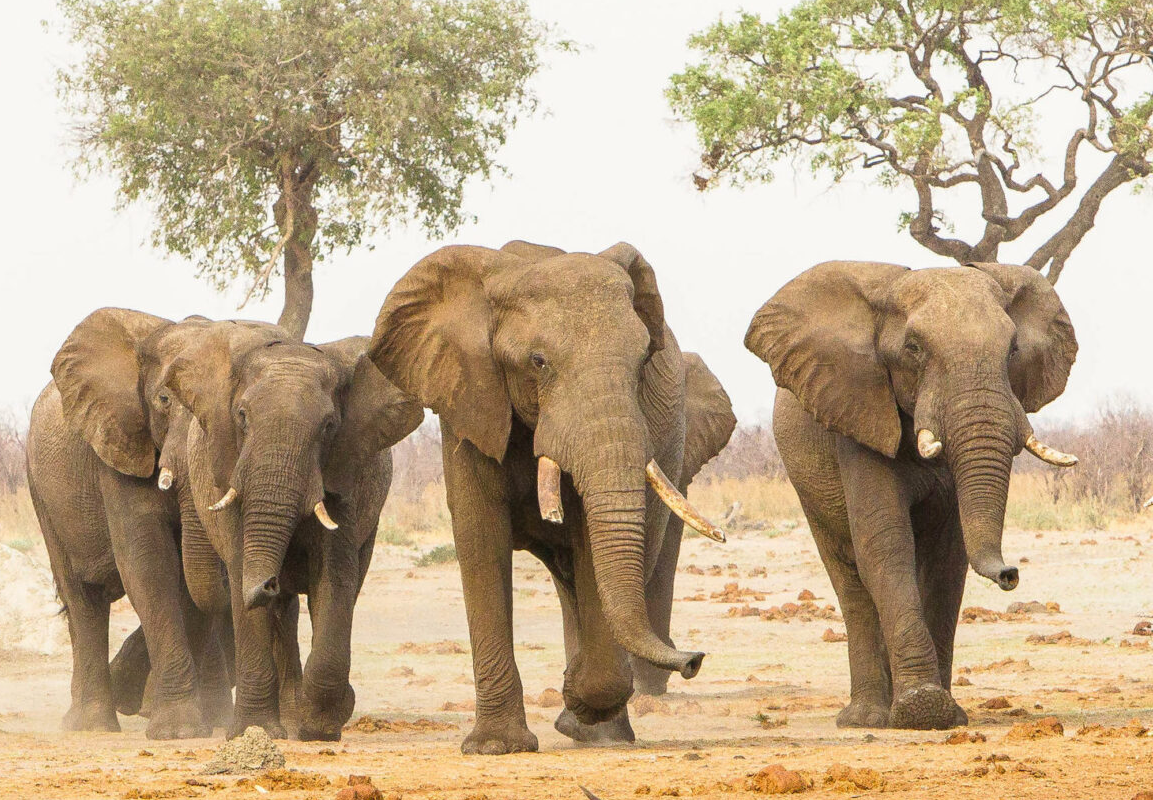
Between May and July as a whole, the limited rainfall attracts creatures to watering holes, providing an excellent display of the country’s wildlife. Another reason why many see this period as the best time for safari in Botswana is the lack of mosquitoes. Clear skies and minimal rain reduce these insects’ activity, creating much more comfortable conditions for exploring the parks.
August to October in Botswana
Temperatures begin to climb again in August. As a popular time of year to go on a safari in Botswana, you will need to make reservations in advance to secure a spot during this period. Those visiting in August will see the water levels of the Okavango Delta at their highest.
Along with being a captivating sight to behold, this offers fantastic game-viewing opportunities Take a canoe safari to leisurely drift along the serene waters, gazing up at the remarkable creatures around you.
September is thought by many to be the best time to go on safari in Botswana as it offers incredible opportunities for spotting the Big Five. While wildlife viewing can prove slightly tricker in general during September, it is one of the easiest times of year to spot these famous animal residents.
Lions, leopards, African elephants, rhinos and buffalos are often seen gathering around the only available food and water sources in the region. The Lynanti and Chobe Rivers make especially exceptional areas to head to see animals during this month as many creatures gather by these waters for survival.
You may even be able to spot the magnificent black-maned lions during this period of the year as they stalk large herds of springbok and red hartebeest by the river. October is another wonderful time to go on a safari holiday in Botswana.
As the country’s hottest month of the year, game viewing is a breeze. The sparse vegetation ensures clearer sightings and you’ll have ample opportunities to observe thirsty herds congregating along the riverbanks.
November to December in Botswana
November and December are also wonderful times of year to go on a safari trip to Botswana. This period marks the start of the rainy summer season, bringing swift, heavy showers throughout the day that rejuvenate the country’s parched landscape.
The country’s parks undergo a remarkable transformation, donning a lush coat adorned with a stunning variety of flowers, plants, and trees. November offers a particularly enchanting time to visit Botswana as this is when many of its herbivore creatures give birth.
While this can be an adorable sight in itself, the presence of the young ones also attracts the attention of big cats. Those visiting during this period will be spoiled with an abundance of opportunities to see coveted park inhabitants such as lions, leopards and cheetahs.
December is another wonderful time to take a safari in Botswana. As the country’s deserts burst into bloom, numerous herbivores like antelopes and impalas gather against the flowering plants. This congregation often captures the interest of the big cats, making it another excellent month for seeing lions, leopards and cheetahs.
Migratory birds also arrive in December, lighting up the sky with fluttering kingfishers, vibrant bee-eaters and energetic cuckoos. One thing to bear in mind when visiting during this time is the likelihood of thunderstorms and rainfall.
While this might require some planning around the weather, you will also be able to enjoy the benefits of reduced dust and the breathtaking beauty of dramatic skies and flourishing landscapes. Another wonderful advantage of visiting Botswana in December is that you’ll be able to catch Makgadikgadi, the country’s second migration, when herds of majestic zebra and wildebeest thunder across the terrain.
Summary
While each of the months in Botswana provide a different safari experience, each promises a glorious experience of discovering dazzling landscapes and incredible creatures. Whether you’re travelling solo or with family, friends or your partner, prepare to embark on a safari adventure like no other in this magnificent corner of the world.
Planning a luxury safari in Botswana? Take a look at our fantastic range of itineraries and luxury accommodations that are available all over the country, from the Okavango Delta to the Kalahari Desert. Get in touch now to start planning your dream safari trip.
Some images used in this blog are the property of our partners. Please contact us for more details.
What to Pack for a Safari
Safari holidays promise an extraordinary getaway like no other, introducing you to some of the world’s most extraordinary landscapes and wildlife species. However, given the unique and active nature of this kind of trip, it’s crucial to pack effectively in preparation for such an adventure.
No matter which destination you choose, whether it’s Kenya, Tanzania, South Africa or elsewhere, there are essential items you should bring to ensure you have the most comfortable and enjoyable experience possible.
Let’s delve into some of the most important items to include on your safari packing list.
1. Passport, Itinerary, Travel Insurance Docs and E-Tickets
Wondering what to pack for a safari holiday? The most important thing to remember is your travel essentials, such as your passport, travel insurance documents, and e-tickets. While these may seem obvious, forgetting such crucial items could put a stop to your adventure in no time.
To stay organised and ensure you have everything you need, consider keeping all of these essentials together in a dedicated document holder. This way, you can prevent them from getting lost among other items in your luggage and have easy access to them when needed.
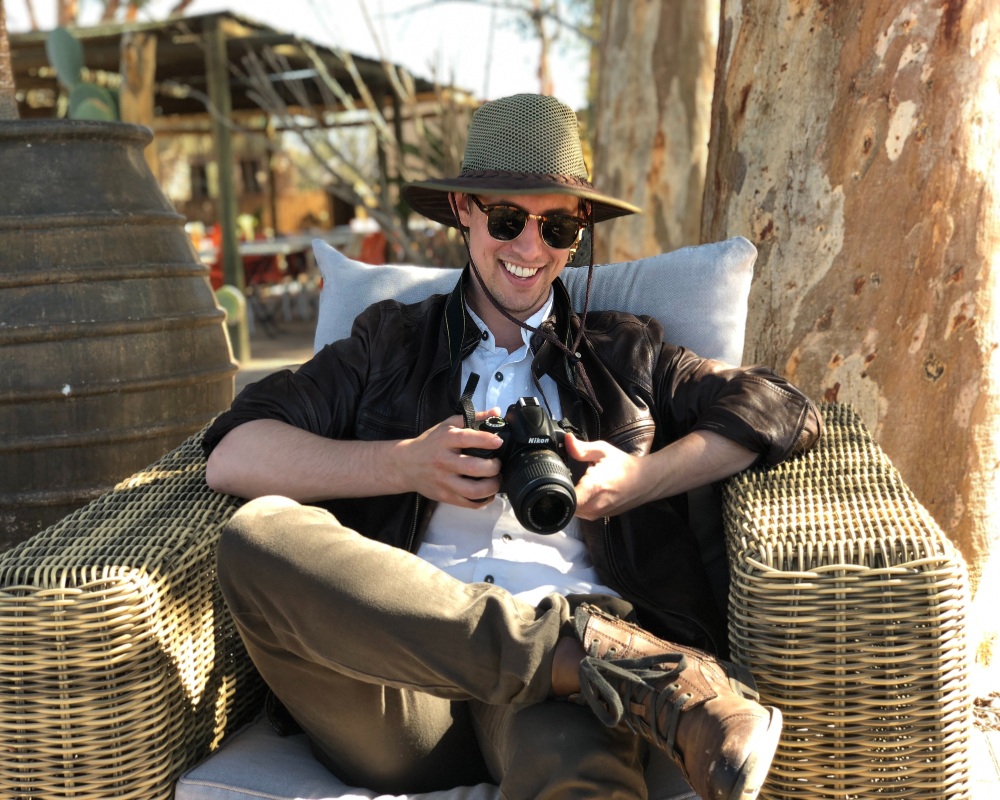
2. Glasses and Sunglasses
Do not forget your glasses or sunglasses while packing for a safari. Classic wildlife destinations such as Tanzania and Kenya tend to get very hot. Wearing sunglasses not only protects your eyes from harmful UV rays but also enhances your visibility, allowing you to fully appreciate the beauty of the wildlife and landscapes around you.
For those with prescription spectacles, remembering to pack them is even more crucial. Safari holidays involve spending extended periods scanning wide expanses in the hopes of spotting unique wildlife species. The last thing you want is to miss out on seeing some of the world’s most impressive creatures or have a blurry view due to forgetting your glasses.
3. First Aid Kit
While packing for a safari, it’s crucial to keep in mind that you’ll be spending much of your time outside, surrounded by untamed nature. With health and safety being a top concern, it’s best to arrive prepared and equipped to handle any common sicknesses that can arise with a first aid kit.
Be sure to include essentials such as hand sanitiser to maintain good hygiene, antibacterial cream that is for treating cuts or insect bites and bandages or plasters to treat minor wounds and prevent infections. Being prepared with these items will help you stay comfortable and safe throughout your adventure.
On the majority of safari tours, your guides will carry their own comprehensive first aid kits to deal with any illnesses or injury that occur whilst you’re out in the wild. But you may benefit from your own if you have any allergies or medicine preferences, and a first aid kit might come in handy if you need something when you’re back at your accommodation.
4. Bug Repellent
Insect repellent is an essential when packing for an African safari. As you explore the wild landscapes, you’ll inevitably encounter a wide variety of bugs, many of which can bite and sting. Among these pests, flies can be especially bothersome.
To fully enjoy your dream safari adventure without any unnecessary discomfort, come prepared with repellent. Taking this simple precaution can save you the annoyance of being constantly bothered by insects. Instead, your focus can remain solely on the glorious scenery and creatures around you.
5. Suncream
If there’s one item you should absolutely include on your safari packing list, it’s suncream. No matter the time of year, it’s important to remember you’ll be spending an extended period of time outside in the sun. Intense temperatures can quickly lead to sunburn and potential skin damage when you are not properly shielded.
Protecting your skin from harmful UV rays is paramount. Opt for a high SPF (sun protection factor) sunscreen and apply it generously and frequently throughout the day. Additionally, it may be worth bringing a protective balm to protect your lips as well.
6. Binoculars
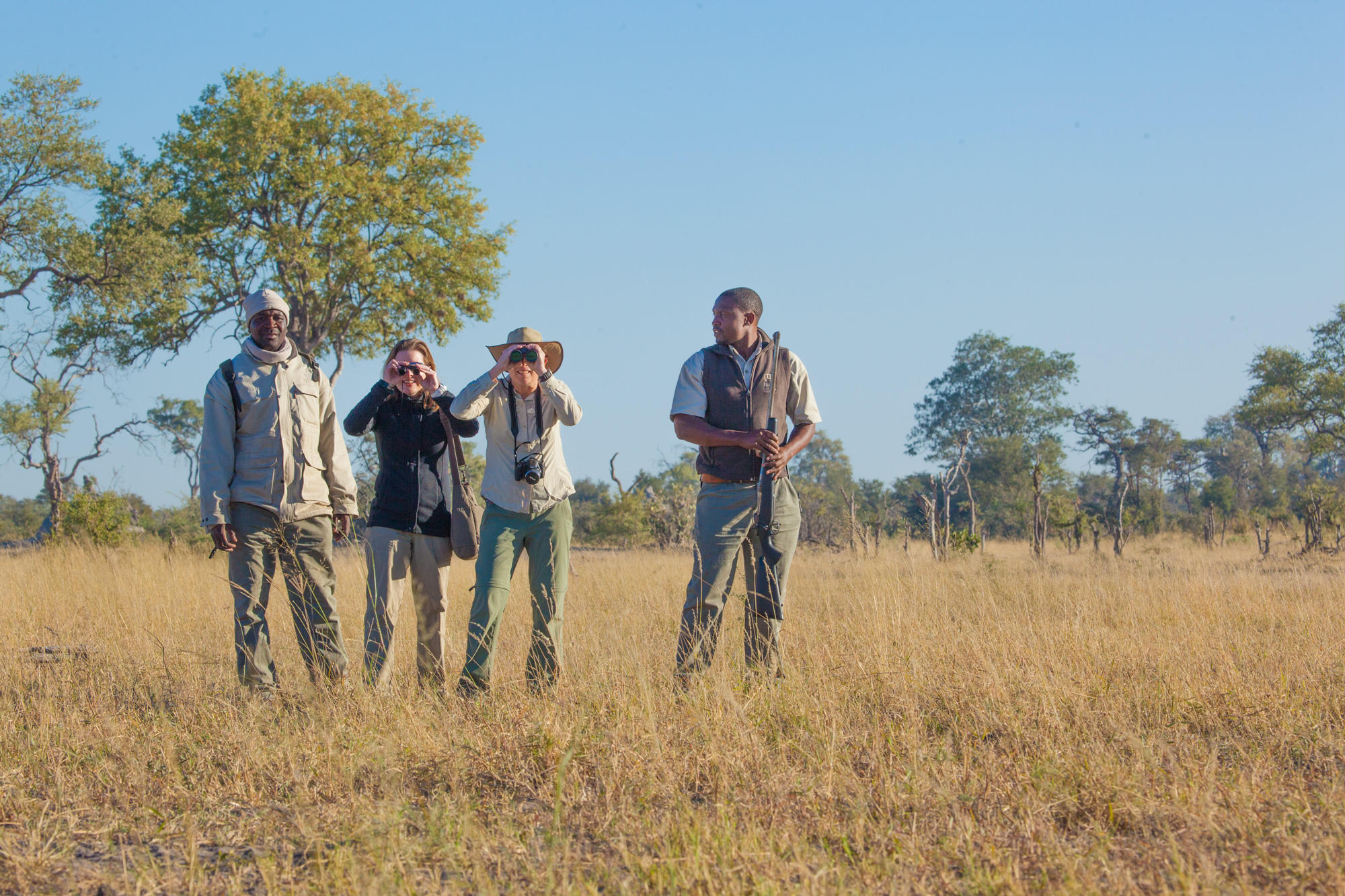
When going to see some of the world’s most incredible creatures, you’ll want to give yourself the best viewing experience possible. That’s why binoculars are a must-have accessory for any safari enthusiast.
Binoculars offer real-time magnification, allowing you to clearly observe animals in their natural habitats from a distance without disturbing them. Whether it’s spotting elusive creatures or observing detailed behaviour, binoculars provide you with a fantastic view, making your safari experience all the more exciting.
7. Camera and Video Recorder
You’ll undoubtedly want to capture some of the extraordinary wildlife scenes you come across on game drives and walking tours. So, do not forget to pack your camera or video recorder.
Being able to snap a picture of the incredible landscapes and creatures you encounter will preserve the scenes you come across, allowing you to cherish these awe-inspiring moments and look back upon them when you return home. Having a video recorder to hand enables you to record not just the sights but the sounds and movements of the animals, creating lasting memories of your safari experience.
To truly capture the scenery in its full glory, equip your camera with a zoom lens. This way, even if the animals are several metres away, you can still get up-close shots, bringing those majestic creatures right into focus.
8. Headwear
When packing for a safari, be sure to remember your most protective sun hat. Throwing in some reliable headwear will shield your eyes from the glare of the African sun, while also protecting your skin from the rays.
Caps can be a good option as they shield your face. However, wide-brimmed options such as bucket hats are even better as they provide comprehensive coverage for your neck and ears as well.
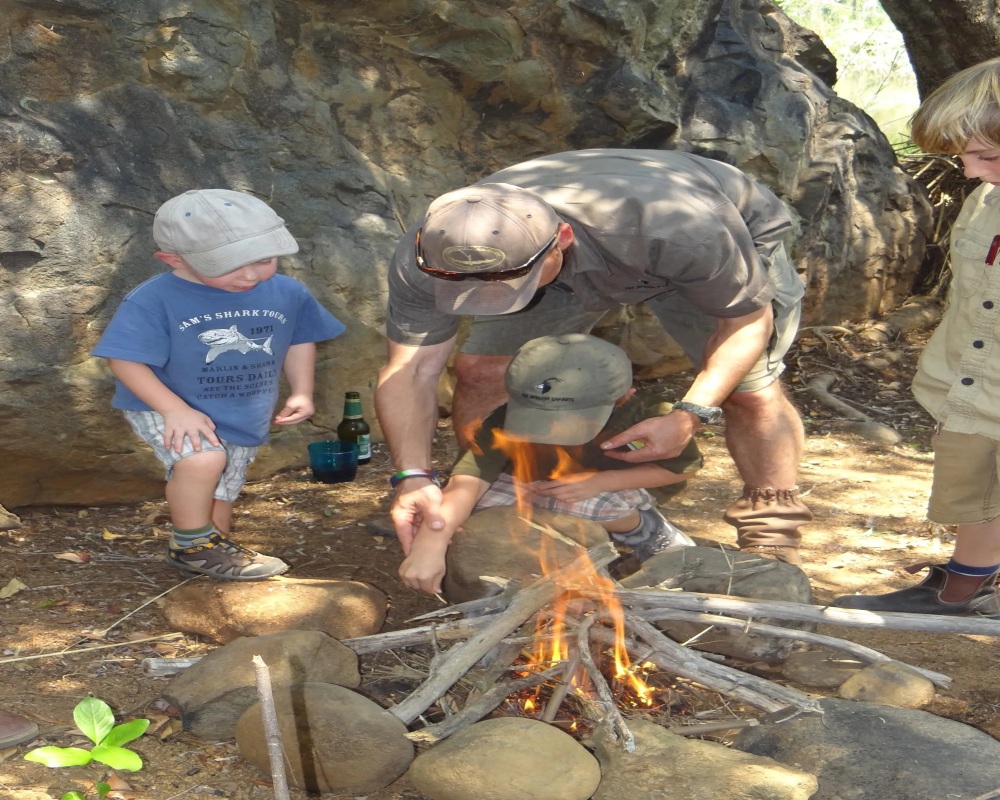
9. Footwear
It is worth bearing in mind when packing for a safari that you’ll be spending a significant portion of your time walking on cracked plains or by untamed vegetation. For this reason, you’ll want to bring your sturdiest and most breathable pair of hiking boots.
While this may come as disappointing news, given the size and weight of such items, it is paramount to prioritise comfort and functionality as you’ll be facing challenging terrain and high temperatures. Wearing appropriate footwear will keep you as comfortable as possible, allowing you to fully enjoy and embrace every aspect of your safari adventure.
10. Comfortable Clothing
When it comes to witnessing awe-inspiring natural phenomena like the great migration of wildebeests or observing tree-climbing lions, your focus will naturally be on the incredible sights and experiences, rather than on your outfit.
However, it’s very normal to struggle with deciding what clothes to bring on your adventure. To help you with this, we have shared some key safari clothing tips below.
- Dress Casually
Casual clothing is the way to go when it comes to a safari wardrobe. Opt for lightweight, breathable garments that will keep you cool and comfortable during day and night time excursions. Fabrics like cotton or moisture-wicking synthetics are perfect for staying dry and at ease in the African heat.
Comfort is also key, as safari holidays can be quite active. Opt for loose-fitting clothing that allows you to fully enjoy your wildlife experience without any restrictions.
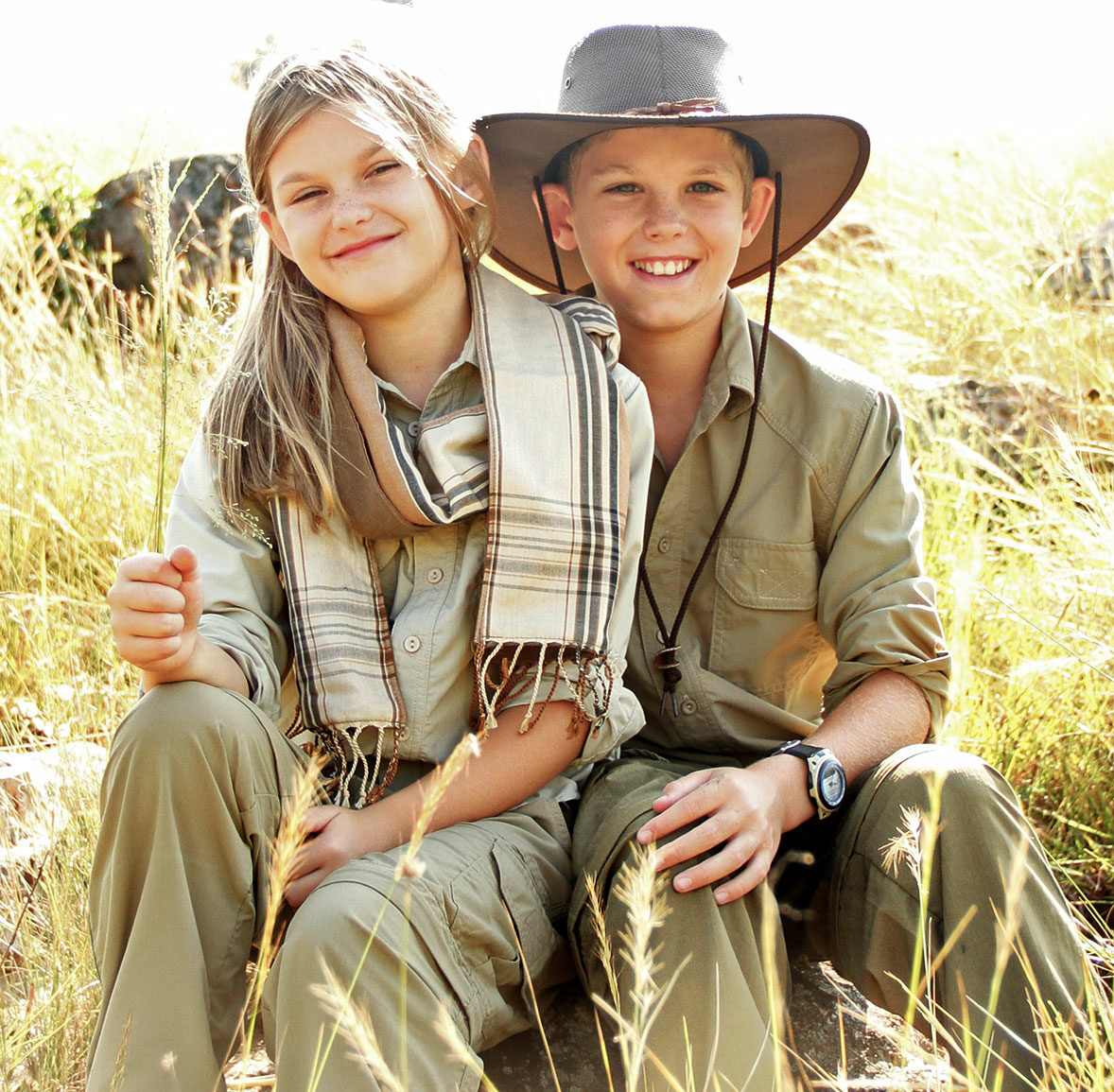
- Neutral Colours
One of the most important things to remember when organising your safari packing list is to restrict your wardrobe to dull, neutral colours. Light browns, tans and greens are the ideal shades to go for.
While many species are colour-blind, they’re also highly sensitive to high contrasts such as those produced by bright colours and loud patterns. As a result, you will stand out very dramatically to animals as something unfamiliar.
As a result, they may be cautious, wary of making themselves visible to you or approaching your vehicle. This could significantly reduce your opportunities for wildlife spotting during the safari.
- Use the Laundry Service
Many luxury safari lodges provide a convenient same-day laundry service. This means you can leave your dirty clothes with the staff at your accommodation, head out on your exciting adventures and return to find freshly cleaned outfits waiting for you.
Utilising the lodge’s laundry service is a game-changer when it comes to packing; you won’t require a fresh outfit for every day of your safari. This can significantly reduce the amount of clothing you need to carry in your luggage and the amount of baggage you need to bring with you.
- Dress in Layers
When packing for a safari, it’s essential to include layerable garments. The temperatures in classic safari destinations can vary dramatically throughout the day. Mornings can be quite cool, before getting extremely hot in the afternoon and then very chilly in the evening.
It’s essential to include layerable garments while packing. Classic safari destinations often experience dramatic temperature variations throughout the day. Mornings can be quite cool, followed by scorching heat in the afternoon and finally, a chilly evening.
To adapt to these changing conditions, layering becomes crucial during safari holidays. Dress warmly in the morning. As the day heats up, you can peel off a jumper or two. In the evening, you’ll want to put them back on to stay comfortable.
Make sure to pack easy-layering items such as fleeces, warm jackets and scarves to accommodate the varying temperatures and enjoy your safari experience to the fullest.
- Don’t Overpack
Along with considering what to pack for a safari, it’s also worth thinking about items that would be better left at home. These kinds of holidays typically entail travelling between different national parks so, lugging around excessive luggage can be quite cumbersome.
Unlike other types of travel, even on luxury safaris, fashion takes a backseat to practicality and comfort.
- Bring a Raincoat
You should always pop a waterproof layer in your suitcase, especially if you’re planning to visit during the rainy season. Even in the dry months, occasional showers can catch you off guard.
To ensure absolute comfort during your expeditions, remember to include a high-quality raincoat in your safari packing list. With a reliable waterproof by your side, you can confidently explore the breathtaking landscapes and encounter incredible wildlife without any worries about sudden showers.
- Pack One or Two Nice Outfits
While comfortable clothing is undoubtedly the priority when packing for a safari, don’t forget to include one or two nice outfits in your packing list. Your adventure may begin and end with stays in big cities like Cape Town, where you might want to enjoy a nice meal in the evening.
Additionally, you may be wanting to pop on a nice outfit for dining at the restaurant of a luxury lodge. By packing some smarter clothes, you’ll be ready to indulge in both the thrill of the wild and the charm of a plush dining experience during your safari journey.
Summary
Whether you embark on a solo adventure or head off with family or friends, safari holidays require careful consideration and planning. However, all the effort put into the preparation is instantly rewarded the moment your adventure begins.
From witnessing some of the world’s rarest and most magnificent wildlife species in their natural habitats to exploring breathtaking landscapes on foot, there are few quite as magical experiences as a safari holiday.
Considering embarking on a safari adventure? Take a look at Coral Tree’s wonderful selection of itineraries and accommodation that are available everywhere from Tanzania to Seychelles. Get in touch today to turn your safari dreams into a reality.
Some images used in this blog are the property of our partners. Please contact us for more details.
The 7 Best National Parks in Tanzania
Tanzania has emerged as one of the top safari destinations in Africa, thanks to its diverse landscapes and abundant wildlife. From the untamed acacia forests to the vast shores of one of the continent’s largest lakes, it’s no wonder that this country has garnered such high acclaim for its natural beauty.
Amidst the extraordinary landscape, it’s natural to wonder about the number of national parks scattered across Tanzania. The answer is a remarkable 22.
Each park possesses its own unique characteristics but they all share one common thread: they provide a habitat for some of the world’s most renowned wildlife species, ranging from majestic lions to elegant flamingos.
With so many sensational parks to explore and animals to see, many are left wondering where to go on a safari in the country. To make it as easy as possible to plan an unforgettable adventure to this wild paradise, we have put together a list of The 7 Best National Parks in Tanzania.
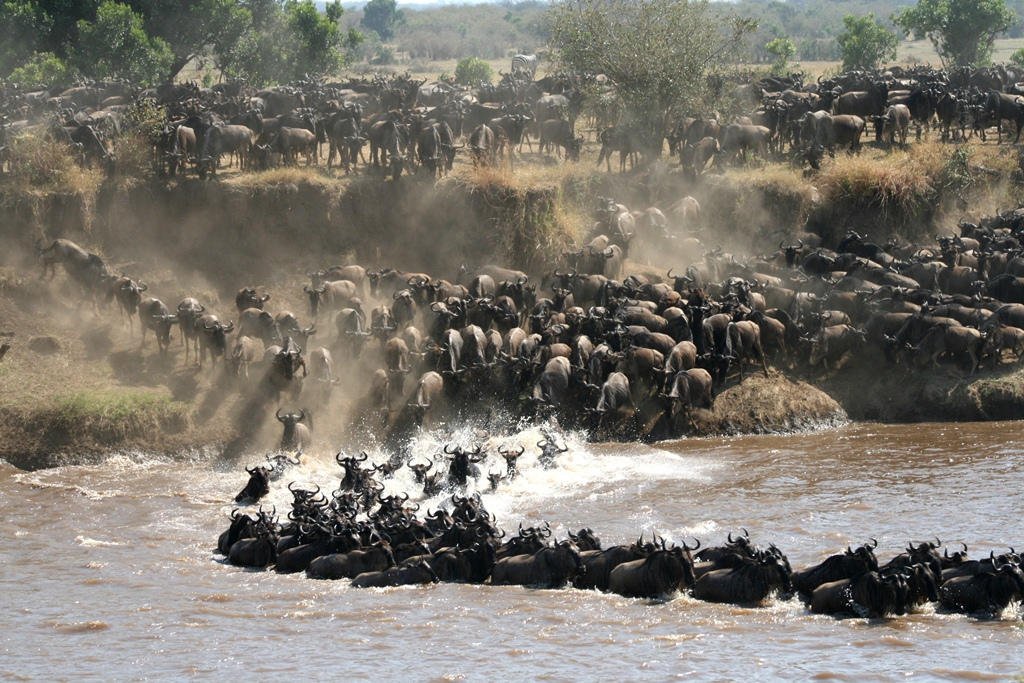
1. Serengeti National Park
Among the exceptional national parks in Tanzania, Serengeti shines strong as one of the most magnificent. It is one of the largest in the country and is world-renowned as one of the Seven Natural Wonders of Africa.
The park lies nestled in northern Tanzania and spans the Mara and Arusha regions. It is home to one of the most fascinating ecosystems on the planet as its climate, plants and wildlife have remained virtually unchanged for millions of years.
As a result, Serengeti National Park is said to be home to one of the world’s most untouched and unspoilt ecosystems. With a staggering population of over four million wild animals calling it home, it’s no surprise that this unspoilt oasis is widely regarded as one of Tanzania’s most extraordinary national parks.
One of the most sensational things to see in Serengeti National Park is the Great Migration. Witness over two million wildebeests, zebras, and gazelles as they embark on their epic journey across the Serengeti, eventually reaching the Masai Mara in Kenya.
As if this grand spectacle isn’t impressive enough, the migration also attracts a multitude of predators including lions, crocodiles, and leopards. One of the best times to visit Tanzania for those eager to catch the Great Migration in the Serengeti is July to September.
The river crossings take centre stage during this period as wildebeests storm across the waters, while patient crocodiles lie in wait for their chance to strike. Tanzania offers unparalleled opportunities for wildlife spotting throughout the year.
From graceful giraffes to mighty buffalos and elusive white rhinos to majestic leopards, the park is a haven teeming with extraordinary wildlife.
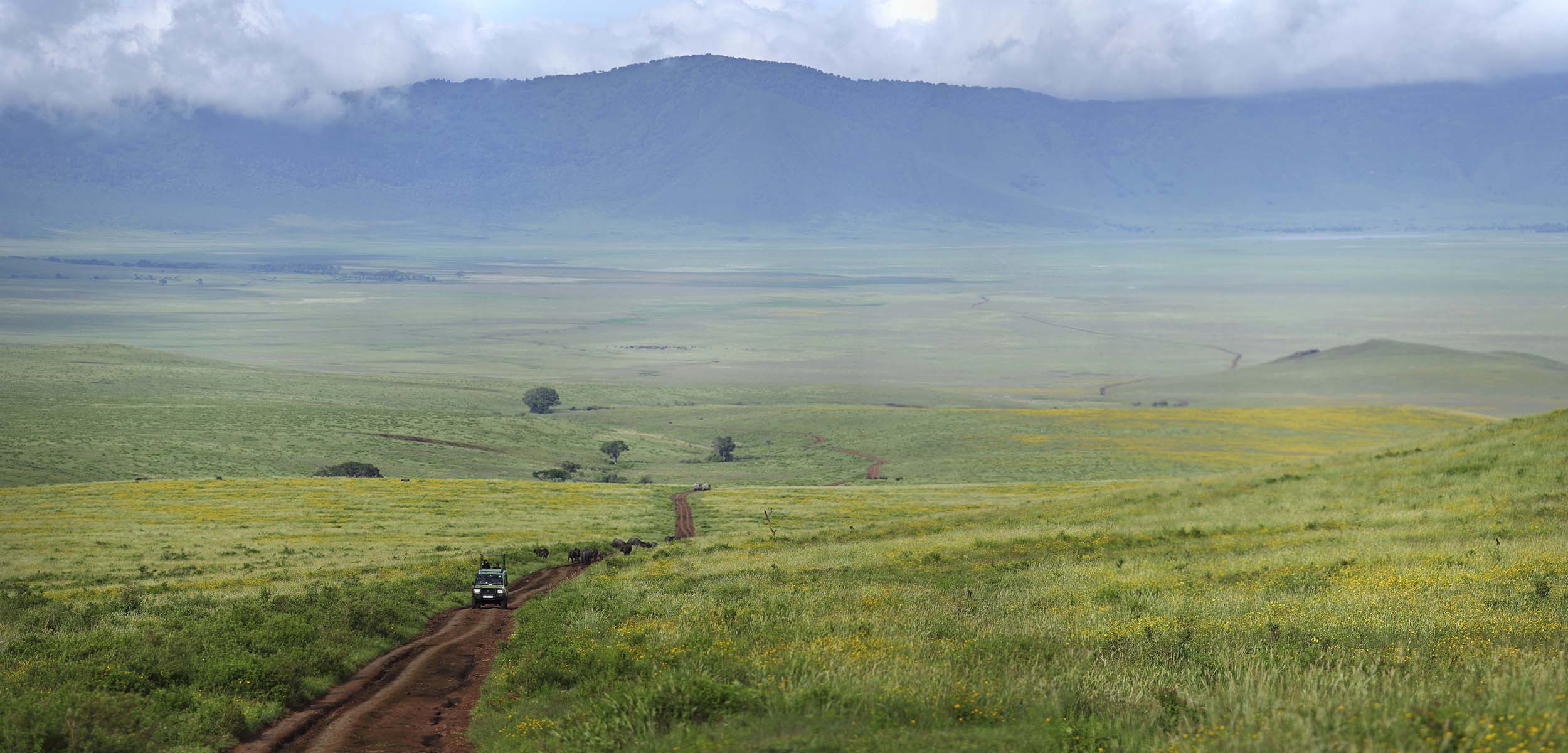
2. Ngorongoro Conservation Area
The Ngorongoro Conservation Area lies in the Crater Highlands in Northern Tanzania and is part of the Serengeti ecosystem. It is here that you will find one of the most incredible sites to see in Africa: one of the largest intact volcanic calderas on the planet.
The UNESCO-protected crater is believed to trace back to three million years ago and is believed to have once stood as a volcano, before ultimately exploding and collapsing in on itself. Flourishing with vegetation, the 16-kilometre-wide caldera is home to the Big Five, along with many of Africa’s most famous large predators.
Prepare to encounter hyenas, jackals and leopards in this untamed terrain. Despite the abundance of predators, other unique creatures can be found all over the park including buffalos, zebras and antelopes.
In fact, this is one of the very few places in Tanzania where you can spot the Black Rhino. The area is also famed for its flamingo population. There are few more incredible sights to see on a safari in Tanzania than these elegant, baby-pink birds flocking together in the park’s shimmering lakes.
If you time your visit right, you’ll also be able to catch the Great Migration, when huge herds of wildebeest, zebra and antelope arrive during calving season. With such a unique landscape, Ngorongoro is one of the most fascinating ecosystems found in Tanzania.
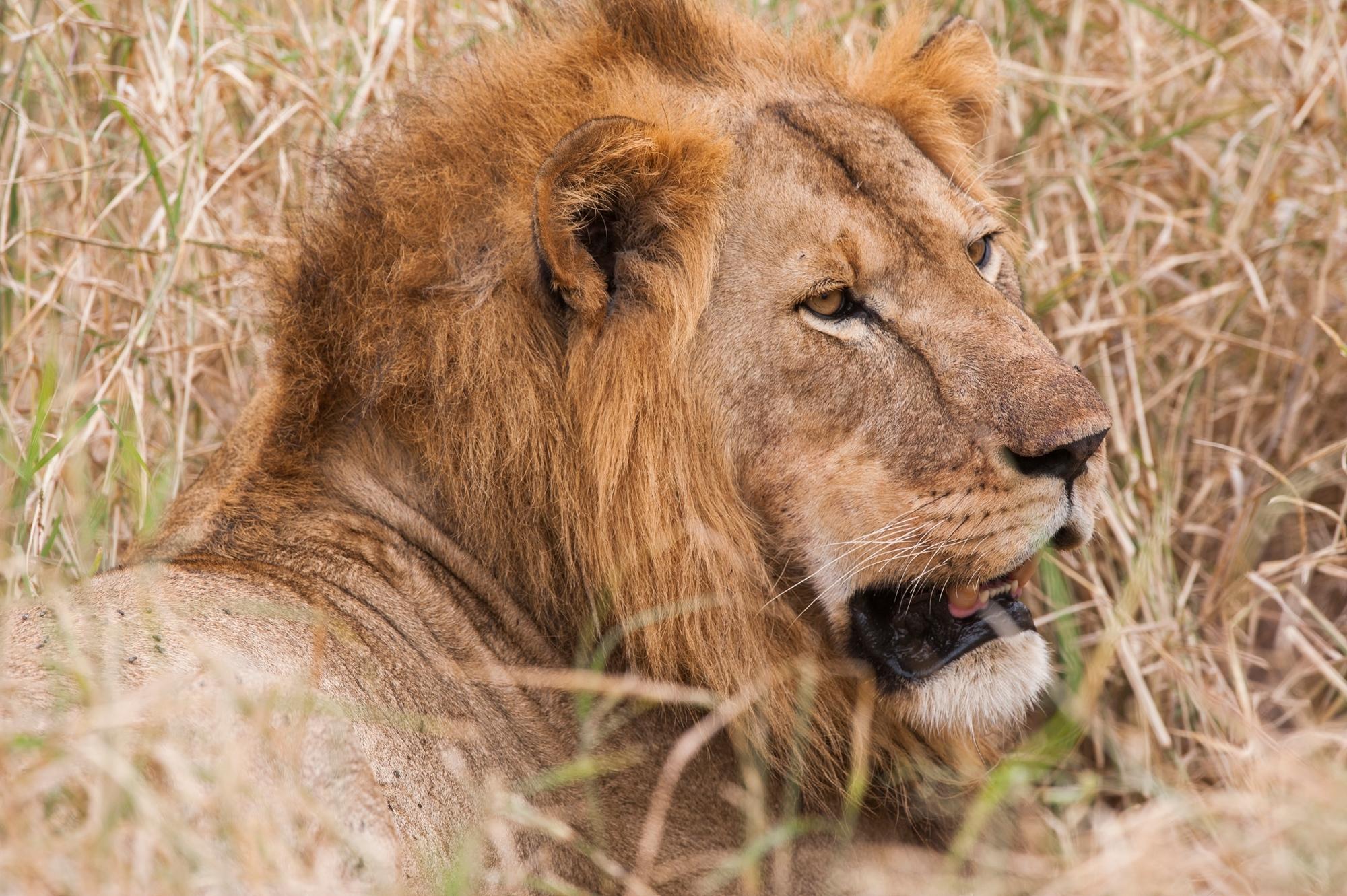
3. Tarangire National Park
Tarangire is one of the best national parks in Tanzania. Picture an untouched tapestry of savannah plains and ancient baobab trees. The site remains slightly more under the radar than other safari areas in Tanzania as it is located in the Manyara region, off the main circuit.
The park’s landscapes are a picture of peace and serenity, with little to be heard beyond the sounds of the local wildlife. With a population of around 3,000 elephants, you’ll never be too far from the resonant snorts and thumps of these glorious creatures.
However, the diversity of wildlife in Tarangire National Park extends well beyond the impressive elephants. Lions can be seen climbing the trees in the park on a daily basis. Visitors are also likely to cross paths with zebras, Masai giraffes, impalas, blue wildebeests, bush pigs, waterbucks and buffaloes.
July to October is one of the best times of year for safari in Tanzania for those looking to visit Tarangire National Park. The landscape transitions to a slightly drier state during this period, drawing animals to gather around the riverbed and creating a breathtaking spectacle of concentrated wildlife activity.
That being said, you can rest assured that a spectacular experience awaits you at Tarangire National Park no matter the time of year. Even during the wet season, the site undergoes a remarkable transformation as the landscape flourishes into a vibrant green oasis.
Exploring Tarangire during this period offers a unique opportunity to witness the park’s rejuvenation, with lush vegetation and a renewed sense of life embracing the surroundings. While wildlife spotting may require a bit more patience amidst the abundant greenery, the reward lies in the breathtaking natural scenery.
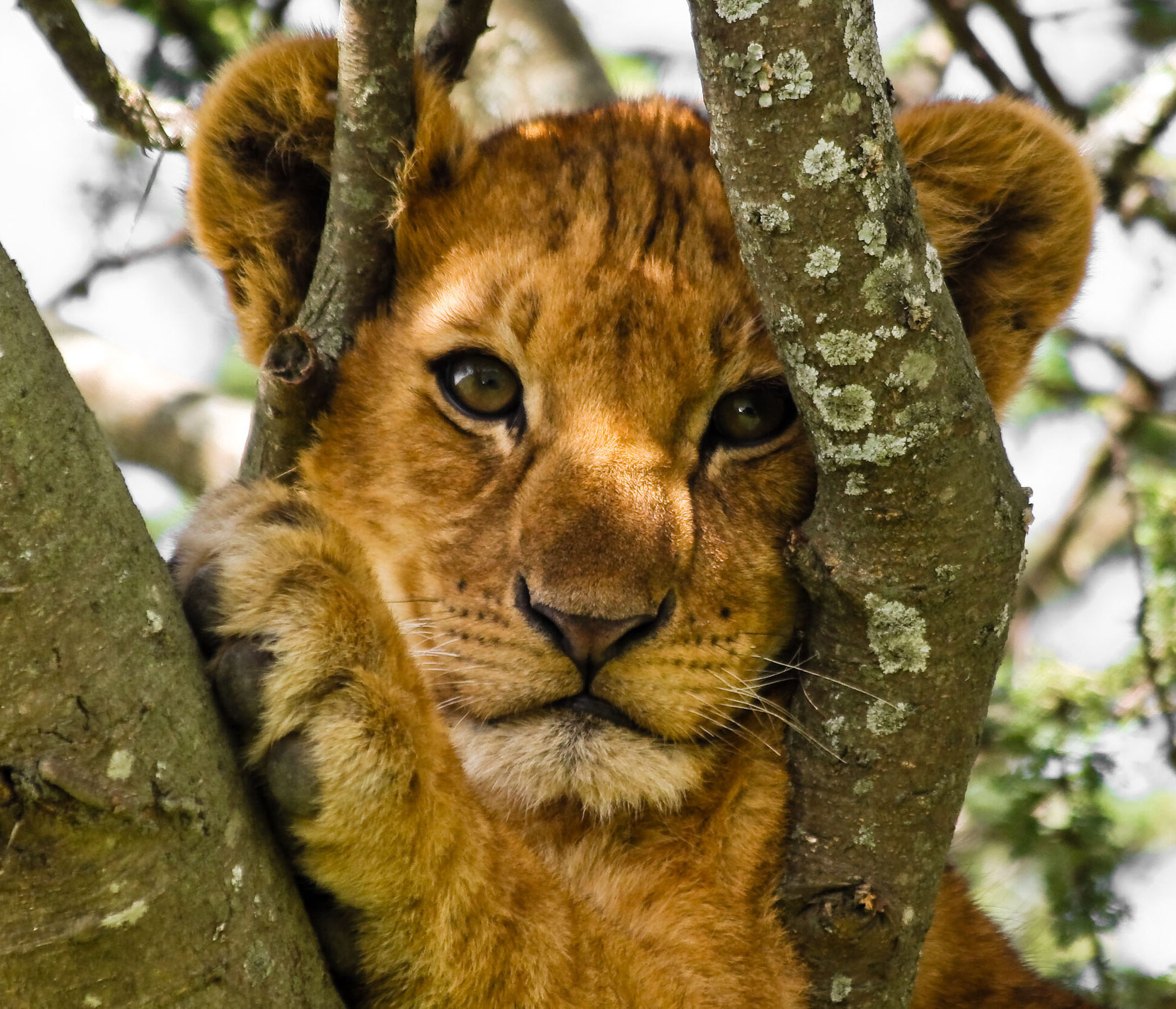
4. Lake Manyara National Park
As one of Tanzania’s smaller national parks, Lake Manyara is often underestimated by those planning a safari holiday. The magnificent site is one of the most incredible in the parts of the country as it supports one of the highest biomass densities of large mammals in the world.
Lake Manyara is home to a sensational variety of wildlife including elephants, buffaloes, hippos and wildebeests. However, it is the park’s famous tree-climbing lions that often steal the show. These majestic big cats scale the flourishing acacias every single day. They can be difficult to spot at first but truly offer the most awe-inspiring sight for visitors of Lake Manyara.
The park is also renowned as a birdwatcher’s paradise, with over 400 species found within its boundaries. Among its avian residents, the park is particularly famous for its 1.9 million flamingos. These elegant, blush-coloured creatures can be seen feeding on the algae of the lake, brightening its shores with rosy hues.
With such a rich diversity of wildlife concentrated within the relatively small area of Lake Manyara, you can enjoy a high likelihood of bumping into many of Africa’s most famous creatures at this park. The lake itself is nothing short of breathtaking. In fact, Ernest Hemingway proclaimed it to be the loveliest in Africa.
5. Nyerere National Park
Nyerere National Park is located in south Eastern Tanzania and lies within The Selous Game Reserve, one of the largest remaining wilderness areas in Africa. The untamed paradise boasts some of the highest concentrations of wild animals on the planet.
The site sprawls over 30,893 kilometres and is one of the most magnificent new national parks in Tanzania, having only been established in 2019. Nyerere is slightly less visited than other spots on the list, despite being one of the best safari destinations in the country.
As a result, many of its spectacular wildlife residents are less exposed to humans. Nyerere National Park is home to all sorts of marvellous creatures including large populations of elephants, giraffes, black rhinos, crocodiles and wildebeests.
As the largest national park in Tanzania and one of the biggest in Africa, you’ll find a marvellous, diverse range of habitats in Nyerere. The landscape is a tapestry of vast grassland, wetland, riverine forests and miombo woodlands.
Discover a diverse range of terrains as you explore Nyerere National Park, encountering magnificent animal species and savouring the tranquil serenity of one of the country’s lesser-known wildlife areas. With its remarkable landscapes and rich biodiversity, it is often hailed as the best national park in Tanzania.
6. Arusha National Park
Arusha National Park is situated in the west of Tanzania, just outside the town of Arusha. At just over 500 square kilometres in size, it is the smallest national park in the country.
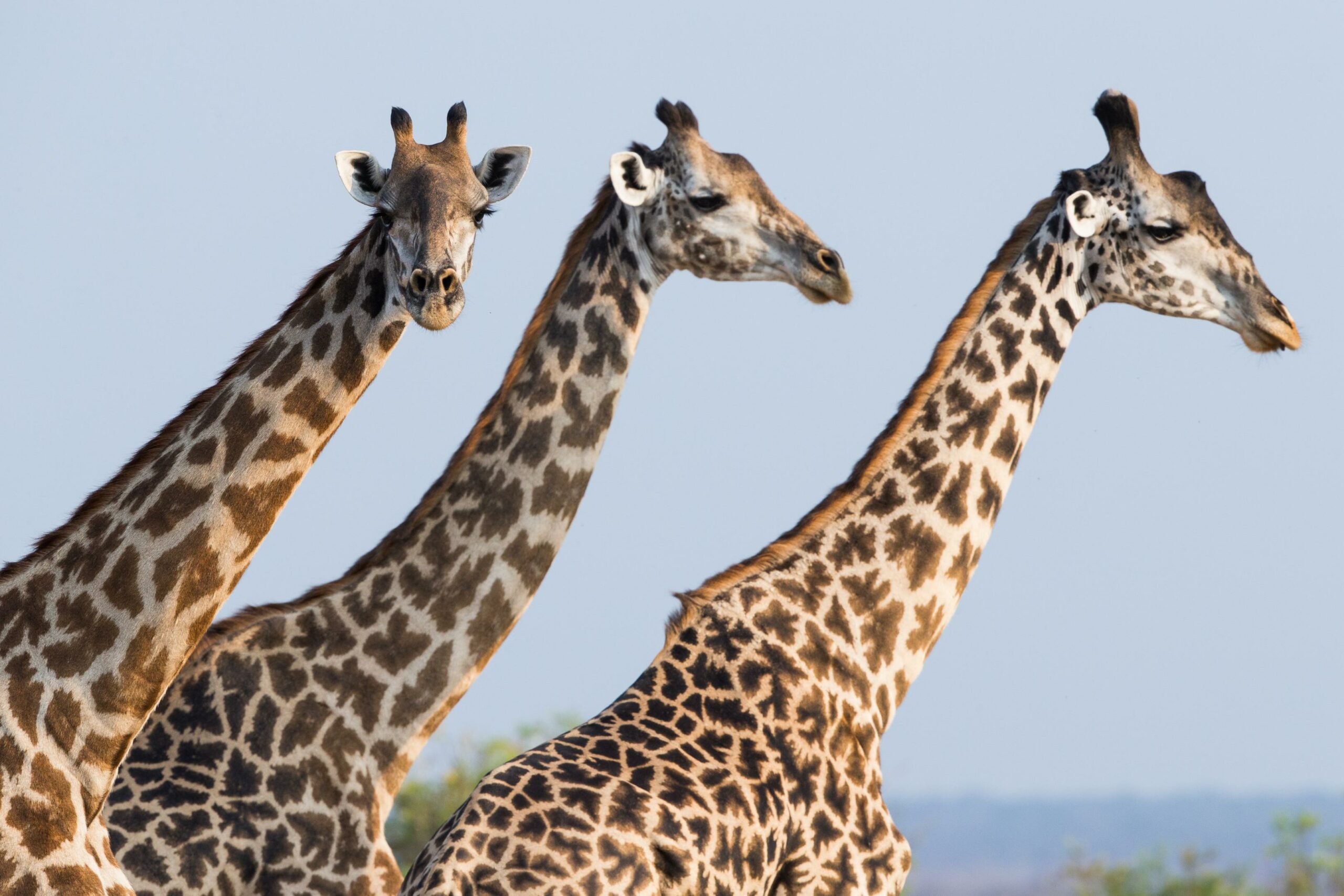
Don’t be fooled by its size, however, as it boasts one of the highest densities of wildlife in the country and boasts the largest population of giraffes in the world. These long-necked creatures can be seen roaming and nibbling on vegetation all over the site.
Beyond giraffes, Arusha National Park is also home to hippos, zebras, elephants and cape buffalos, along with over 400 different bird species. There is also a flourishing population of primates here, including black-and-white colobus monkeys and blue monkeys.
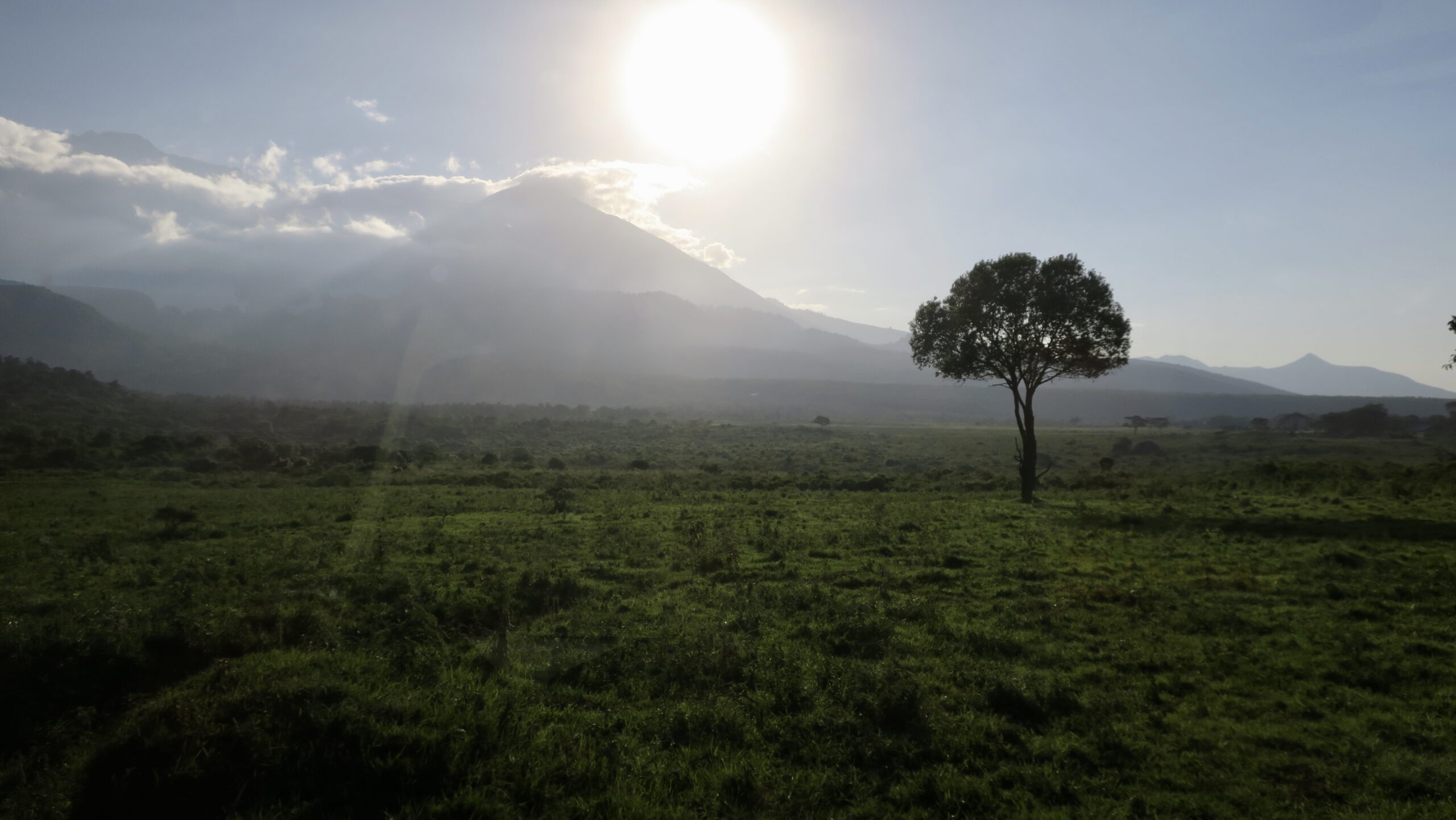
A visit to Arusha National Park would not be complete without exploring Mount Meru, a 14,980 ft volcano located within its grounds. The landscape itself is remarkably varied, encompassing sprawling savannah, rainforest and acacia forests.
Game drives offer the perfect opportunity to uncover the wildlife and landscapes in all of their glory. Alternatively, you’ll have a wonderful array of active explorations at your fingertips including canoeing safaris and bush camping.
7. Ruaha National Park
One of the largest national parks in East Africa, Ruaha sprawls over around 20,226 square kilometres of unspoilt landscape in a remote area of southern Tanzania. Its remote location and expansive size ensure a serene and secluded experience, away from the crowds.
The park gets its name from the Great Ruaha River, the second-largest conservation area in East Africa. There is certainly much to see in terms of wildlife in Ruaha. Picture an unspoilt display of miombo woodlands, rocky hills in the distance and sand-lined rivers.
As you explore Ruaha, you’ll encounter an incredible array of wildlife. Notably, the area is renowned for its elephant population, with over 12,000 of these majestic creatures gathering along the riverbanks.
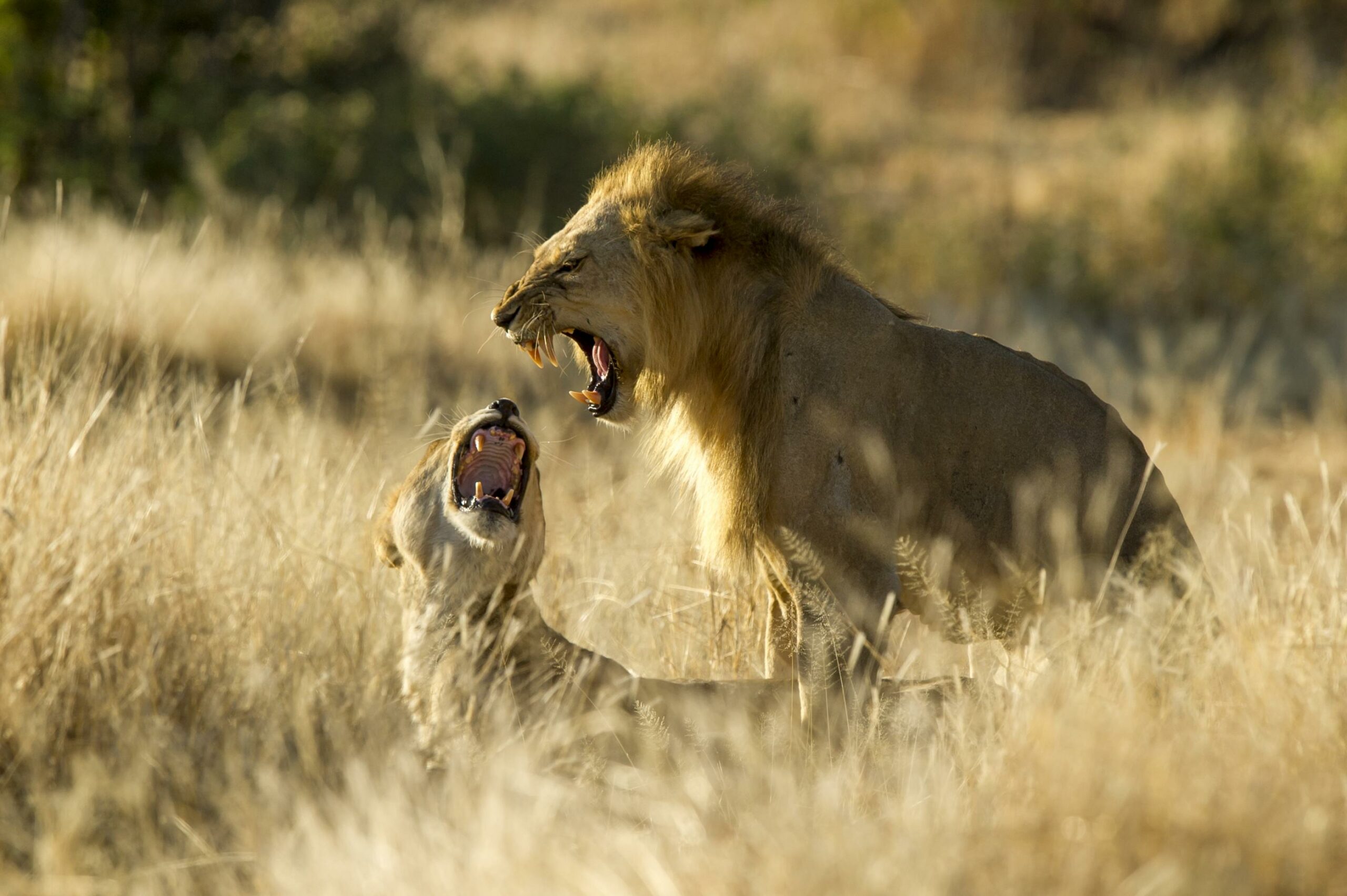
Predators also thrive in Ruaha National Park, with lions roaming the vast expanse, leopards gracefully navigating the riverine forests and cheetahs patrolling the grasslands. Giraffes, zebras, hippos and crocodiles add to the rich array of wildlife in the area.
Bird enthusiasts will be delighted to hear of the park’s diverse range of avian inhabitants. Over 570 species can be seen above the landscape. African fish eagles, kingfishers, bee-eaters and bateleurs are just a few of the bird species you can spot during your visit.
With such a sensational variety of landscapes to explore and wildlife to see, Ruaha is certainly one of the best national parks to visit in Tanzania.
Summary
Tanzania is without a doubt one of the best family safari destinations in Africa. The country boasts an unparalleled variety of national parks to explore. From one of the largest intact volcanic calderas on the planet to sparkling lakes home to tree-climbing lions, there is something for everyone to enjoy.
With so much to see in this magnificent corner of Africa, you simply cannot go wrong with a safari adventure in Tanzania.
Embark on a wildlife adventure of a lifetime on a safari to Tanzania. Check out our wonderful selection of itineraries and accommodation and discover why so many travellers view Tanzania as one of the most incredible safari destinations in the world. Get in touch today to start planning your African adventure.
Some images used in this blog are the property of our partners. Please contact us for more details.
The Best Time of Year for Safari in Tanzania
Tanzania is one of the best places to go on a safari in the world. The country’s vast savannahs, national parks and game reserves are home to many of the most remarkable animal species on the planet, including cheetahs, lions and gazelles.
In addition to the sensational wildlife, this African gem is the proud host of one of nature’s most amazing natural phenomena, the Great Migration. The magnificent spectacle marks the 480-kilometre circular journey made by over 1.5 million wildebeests, through Tanzania’s Serengeti National Park and the Masai Mara in Kenya. There are few more incredible experiences to be had than witnessing this phenomenon first-hand.
Tanzania offers a luxury safari experience like no other, and is the ultimate destination for a bucket list family holiday, a trip with friends or an adventurous couples getaway. The country is home to 22 national parks and seven UNESCO World Heritage Sites, leaving much to explore during your stay.
One thing to bear in mind while planning a trip to Tanzania is that your safari experience will vary significantly depending on when you choose to visit. While the country lies close to the Equator and boasts eight hours of sunlight all year round, temperatures and rainfall can differ hugely from month to month.
In this article, we share all you need to know about when to go on safari in Tanzania.
What is the Weather Like in Tanzania?
Tanzania has two distinct seasons, the rainy season and the dry season. Each one offers very different safari experiences and weather conditions. You might want to get clued up on what kind of climate to expect while planning your trip to Tanzania.
Green Season in Tanzania
Many wonder when the green season is in Tanzania. This period runs from November until May and comprises two stages, the first of which is the ‘short rain’. This season takes place in November and December and tends to see only light rainfall.
One thing to be aware of, however, is that these showers can be quite unpredictable. The second category is the main or long rainy season which occurs during April and May. Tropical showers are more common during this period and humidity levels are high. Temperatures usually hover around 30°C.
Dry Season in Tanzania
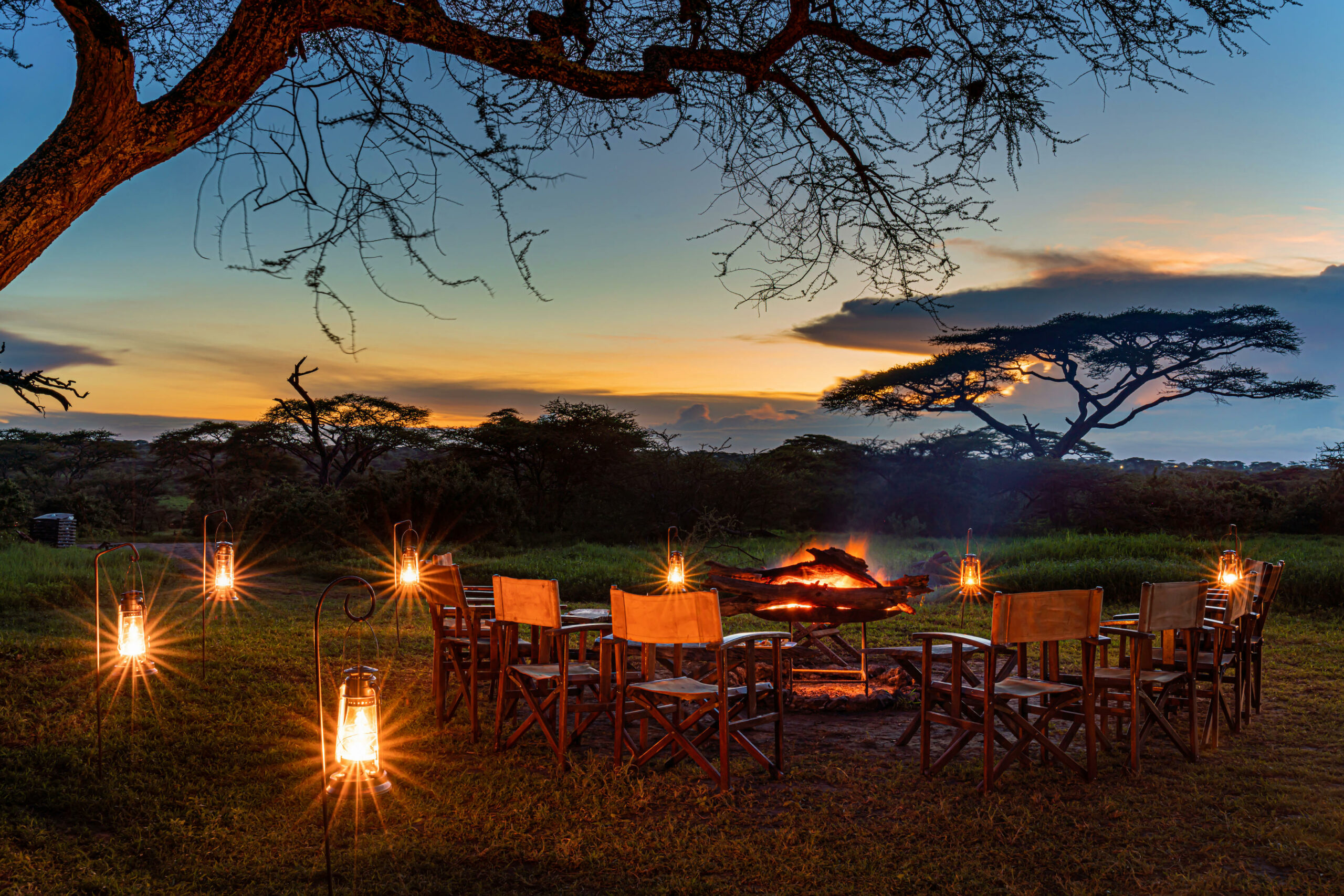
The dry season in Tanzania extends from June to October. Temperatures are slightly cooler over this period, with figures around 28°C. Rainfall is infrequent and the days are characterised by clear blue skies and plenty of sunshine.
It can get a little cold at nighttime and in the early morning in the dry season, but all in all, many view this as the best time to go on a safari in Tanzania.
When is the Best Time to Go On Safari in Tanzania?
The question of when is the best time to go on a safari in Tanzania often comes down to a matter of personal preference. If it is your first time and you’re looking for the best weather and the easiest wildlife tracking conditions, you may wish to stick to visiting during the dry season.
On the other hand, if you are hoping to see the landscape at its quietest and most peaceful, whilst securing the best value, you might want to opt for the green season. We have shared some key things to know about the best time to go on a safari in Tanzania below.
June to September
June to September is often said to be the best time of year for safari in Tanzania. Falling in the dry season, you will not need to worry too much about rain showers and can expect blue, sun-soaked skies. As an additional benefit, the conditions for wildlife viewing will be in their prime.
Hosts of animals can be spotted clustering around watering holes while the sparse vegetation makes it much easier to see creatures throughout parks and reserves. You will have the highest chance of catching a glimpse of “the big five” between June and September.
This group includes elephants, buffalos, rhinos, leopards and lions. With so many of Africa’s most famous creatures on full display, June to September is certainly one of the best times to visit Tanzania for a safari holiday.
While the wildlife spotting opportunities are wonderfully exciting, there is another key benefit to visiting the country during this period: the Great Migration. Watch in awe as millions of wildebeests thunder through the landscape.
Catching this incredible spectacle is sure to impress kids and adults alike. The Great Migration is one of the primary reasons why many see June to September as the best time to do a safari in Tanzania. One downfall of visiting during this period, however, is that it falls under the peak tourist season.
As a consequence, the parks and reserves will be busier, prices will be higher and you will need to book further in advance.
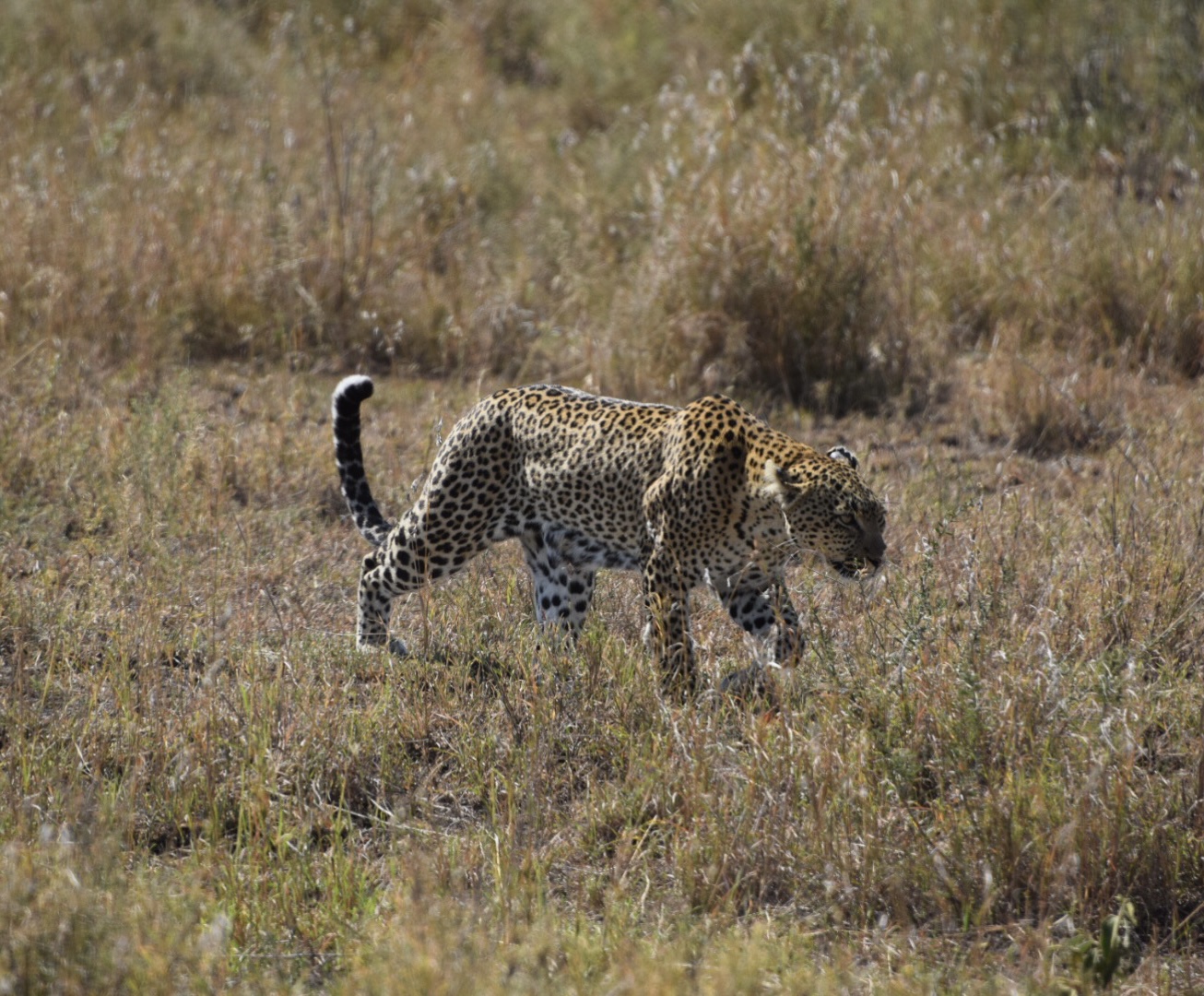
October to December
October to December is one of the best times to go on safari in Tanzania. You will be treated to slightly warmer temperatures, fewer crowds and limited rainfall. These pleasant conditions provide the perfect weather for going on a safari.
November marks the beginning of the Tanzanian rainy season. However, showers tend to be short and periodic, primarily only taking place in the evening. So, as long as you plan your days accordingly, the weather is unlikely to cause any disruption to your adventure.
Another reason why October might be the best time of year for safari in Tanzania is that the jacaranda trees come into bloom, beautifully adorning the landscape with flourishing purple flowers.
December also offers a unique, colourful beauty as the flame trees come into bloom, decorating the area with dazzling red blossoms. Additionally, the festive season is also a fantastic time to go birdwatching in Tanzania as many migratory species arrive in the area.
While the thriving vegetation makes for beautiful scenery, it makes it a little more difficult to spot creatures, as they lurk amongst the vegetation and tall grasses.
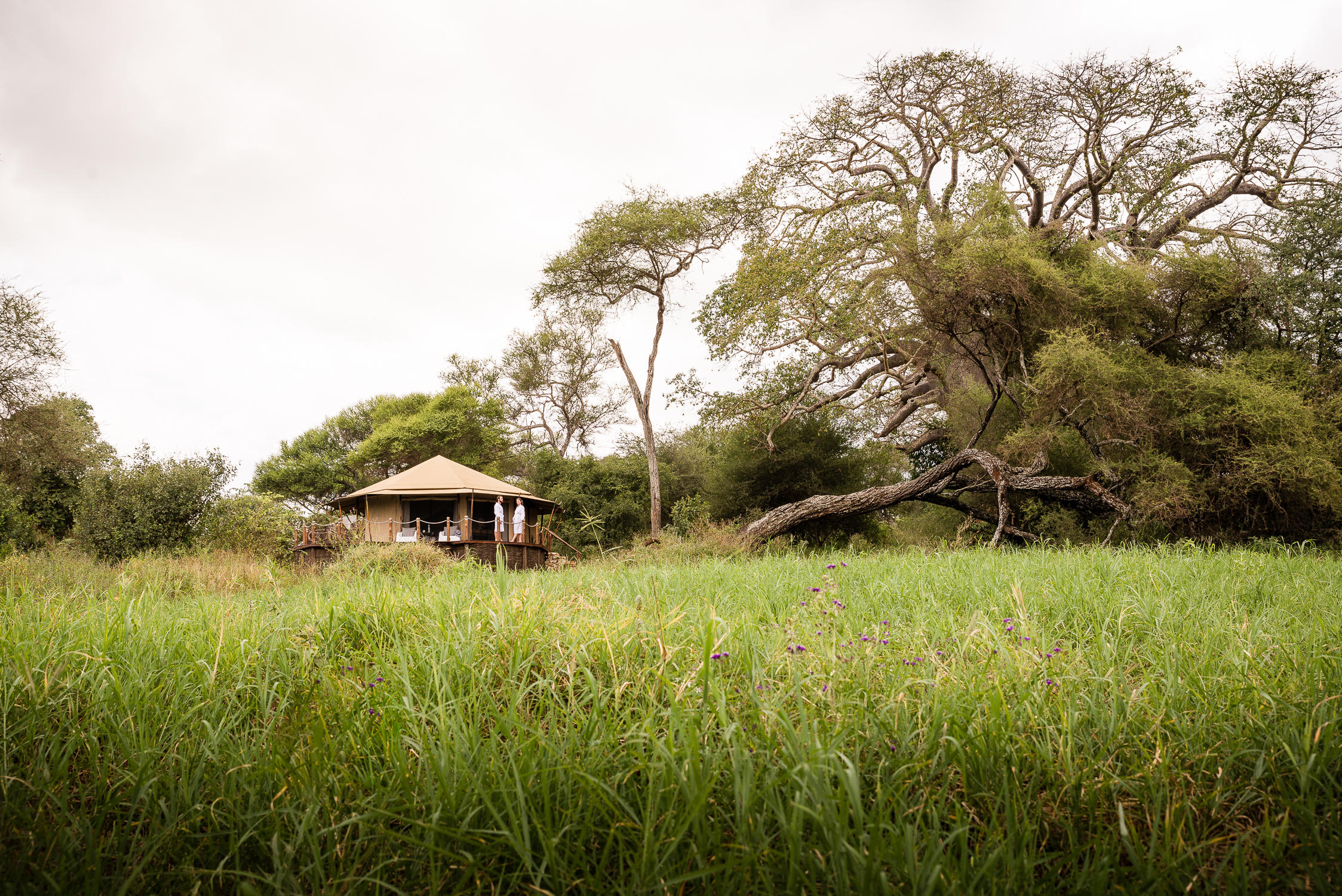
January to February
January and February are two of the best times to do a safari in Tanzania as you will be able to see the landscapes in a whole new light, cloaked in flourishing green vegetation. Temperatures also climb higher, with average figures closer to 30°C.
You will want to raise your eyes to the skies as many migratory birds arrive in the parks during this period. One of the primary reasons why many see January and February as the best time of year to safari in Tanzania is that this is peak calving season.
You will be able to see all sorts of newborn creatures at this time of year, including baby wildebeests. Watch as the adorable hoofed creatures stumble and take their first steps under the watchful eye of their mothers..
Predator action also tends to reach new heights in January in February, with lions, cheetahs and leopards just some of the creatures to be seen prowling the landscape. The heat is one of the main drawbacks of going on a safari holiday to Tanzania during these months.
Be sure to pack plenty of suncream, hats and breathable clothing to stay as comfortable as possible during your stay.
March to May
March to May offers the best time of year to go on safari in Tanzania if you want to see the parks at their quietest. This period falls under one of the quietest visiting seasons as many travellers are put off by the reports of rain
After all, March, April and May fall under the country’s wettest season, when showers are long and commonplace. You may also find it difficult to stay in the best safari lodges in Tanzania during this period, as many shut up shop due to the lack of visitors.
That being said, if you are able to secure accommodation and are adaptable enough to not mind having to accommodate potential schedule adjustments due to the rain, March to May might be an ideal time to visit.
You will get to see the parks in a way that many miss out on, with thick grassy plains, thick woodlands, gushing rivers and gorgeous colourful flowers taking over the parks. With very few choosing to visit during this period, you will be able to enjoy having the landscapes almost entirely to yourselves.
While this picturesque scenery comes at the cost of making the animals harder to spot, this is nothing that an experienced safari guide cannot handle. You will also be able to enjoy lower prices during this time.
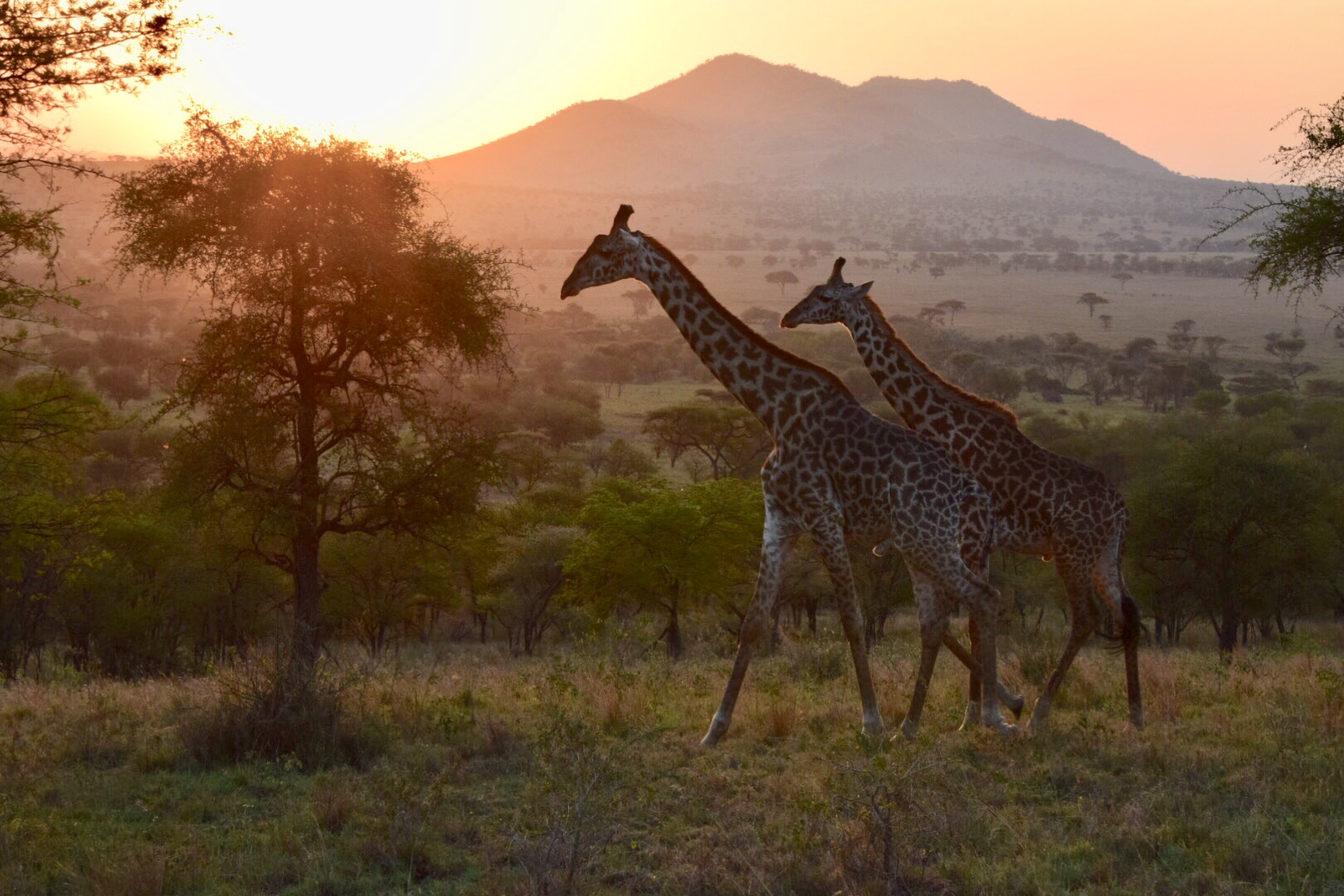
What to Pack for Safari in Tanzania
If you’re wondering how to plan a safari in Tanzania then you are also likely wondering what to pack. We have outlined some essentials below.
Layers of Clothing
One of the important things to remember is to bring layers. Temperatures often drop significantly at nighttime and in the early hours. This means you will want some extra layers to pull on for evening sundowners and morning or nighttime game drives.
A waterproof coat or jacket is a must. The last thing you want is to find yourself caught in a sudden rain shower. To ensure the weather doesn’t dampen your experience, do not forget to pack a light waterproof coat or jacket.
Sun and Bug Protection
One of the most important things to remember when packing for a safari in Tanzania is sun cream. You will be spending long hours outside under the African sun and do not want to end up getting burnt.
To ward off insects and remain as comfortable as possible, you will also want to bring insect repellent or bug spray.
Summary
Tanzania is a spectacular safari destination, perfect for families, friends and couples. An unspoilt wildlife paradise, you will be able to tick off seeing everything from lions to zebras and elephants to wildebeests in this natural utopia. With so many exciting creatures to see, it comes as no wonder why Tanzania is one of the best family safari destinations in Africa.
However, the experience you have in this magnificent corner of the world highly depends on when you choose to visit. You may want to prioritise seeing baby animals, colourful flowers or migrating wildebeests. Whenever you choose to go on a safari in Tanzania, prepare to be taken on a truly unforgettable adventure amidst glorious natural surroundings.
Wanting to set off on a safari holiday to Tanzania? Take a look at our terrific range of safari itineraries and accommodations in the country, or get in touch with our experts for help planning a spectacular trip to this natural paradise.
Some images used in this blog are the property of our partners. Please contact us for more details.
Where to Stay in Tanzania for Safari
Tanzania is a tapestry of breathtaking landscapes, spanning from arid savannahs to lush woodlands. The beauty of the country has been capturing the hearts of nature enthusiasts for decades.
Hiding amongst the glorious beautiful natural surroundings, you’ll find some of the world’s most celebrated creatures such as cheetahs, elephants and giraffes. Offering stunning scenery and incredible wildlife, this magnificent East African paradise is a wonderful place to explore.
In fact, a safari in Tanzania provides the ultimate bucket list family holiday. However, with so many destinations to investigate and animals to see, planning a luxury adventure to this country can seem a daunting task – especially when it comes to finding the right accommodation.
We know how important it is to find the perfect place to stay. After a day of exploring the untamed landscape, you will want to return to a peaceful sanctuary where you can relax and rejuvenate before going on another adventure the following day.
If you’re planning a trip to Tanzania, you’re likely to be wondering what the best places to stay in the country for a safari are. In this article, we share recommendations of the finest lodges and camps in the region, from lavish lodges balanced on the edge of a crater to lush private homes.
In doing so, we hope to inspire you and help you on your way to planning your dream safari in Tanzania.
1. andBeyond Ngorongoro Crater Lodge
andBeyond Ngorongoro Crater Lodge is one of the best places to stay on a luxury safari in Tanzania. The chic establishment offers the best of both worlds, providing complete luxury while immersing guests in the magnificent East African landscape.
The lodge lies perched on the edge of an ancient caldera that traces back almost three million years old. Amongst the gorgeous scenery, you will find endangered black rhinos, giant tusked elephants, lions and flamingos.
You can expect to be sleeping in the lap of luxury amidst the untamed surrounding landscape of the lodge. The chateau-like accommodation effortlessly blends stylish, Victorian furnishings with vibrant African touches.
You’ll have your choice of where to stay amongst the thirty suites that are spread across its three camps. The bedrooms showcase a wonderfully decadent design, while banana leaf ceilings and grass roofs never leave you feeling too cut off from the marvellous natural scenery.
You won’t need to worry about a thing during your stay, with private butlers on-hand to cater to your every need. While gazing over at the Ngorongoro Crater at sunset, you will be able to hear and see the chants of Maasai warriors.
When it comes to things to do, you can set out on game drives to the crater floor, in the capable hands of an expert guide. You’ll also be able to enjoy gorge hikes, wine tastings and private sundowners while staying in the wonderful andBeyond Ngorongoro Crater Lodge.
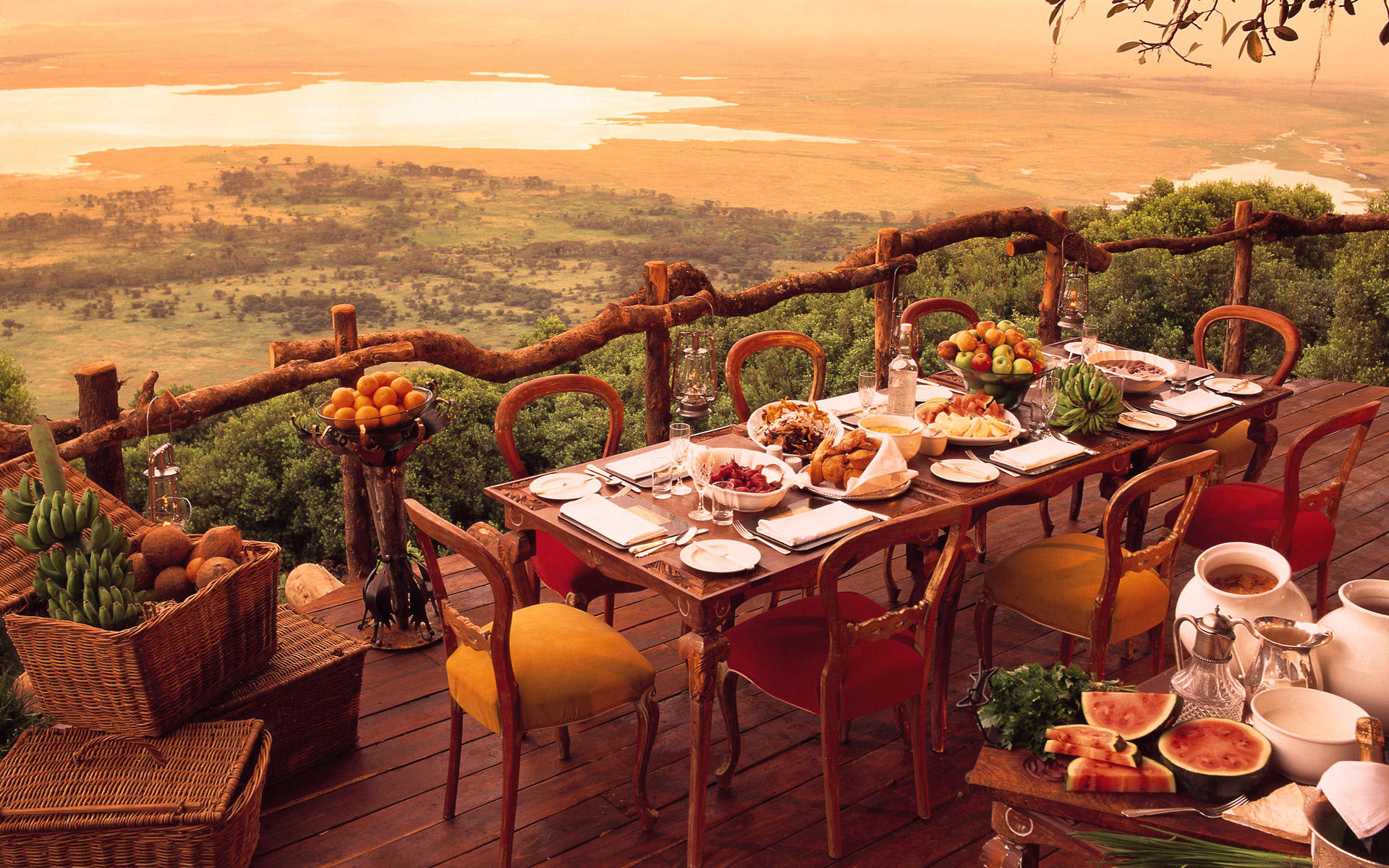
2. Mkombe’s House
Mkombe’s House is another spectacular Tanzania safari lodge. The gorgeous exclusive-use property is the only one of its kind in the Serengeti and offers a wonderful home away from home for those exploring the area.
The lodge is situated in a coveted corner of the Serengeti near the river crossing of the Great Migration, one of the world’s most incredible natural phenomena. Mkombe’s House was created with young families in mind, with safety and privacy at the forefront of its design.
It is self-contained and offers an abundance of private activities. Plus, the dining menu is completely customisable which comes in very handy when feeding the little ones or dealing with selective eaters. This is the perfect place to stay for those travelling with kids.
That being said, Mkombe’s House also warmly welcomes adult-only groups looking for a touch of seclusion during their safari getaway. The property comprises four stylish bedrooms, a lounge area, dining rooms, a swimming pool and a plunge pool.
The gorgeous home boasts glorious views over the northern Serengeti and makes a wonderful base for going on safari drives and game viewing and witnessing the crossings of the Mara River. Enjoy privately guided tours during your visit, led by a highly trained resident in the area.
Set off on bush walks during the day, spotting spectacular animals such as gazelles and zebras. Families will also be able to make use of a plethora of child-friendly offerings during their stay such as the toddler pool and flexible scheduling.
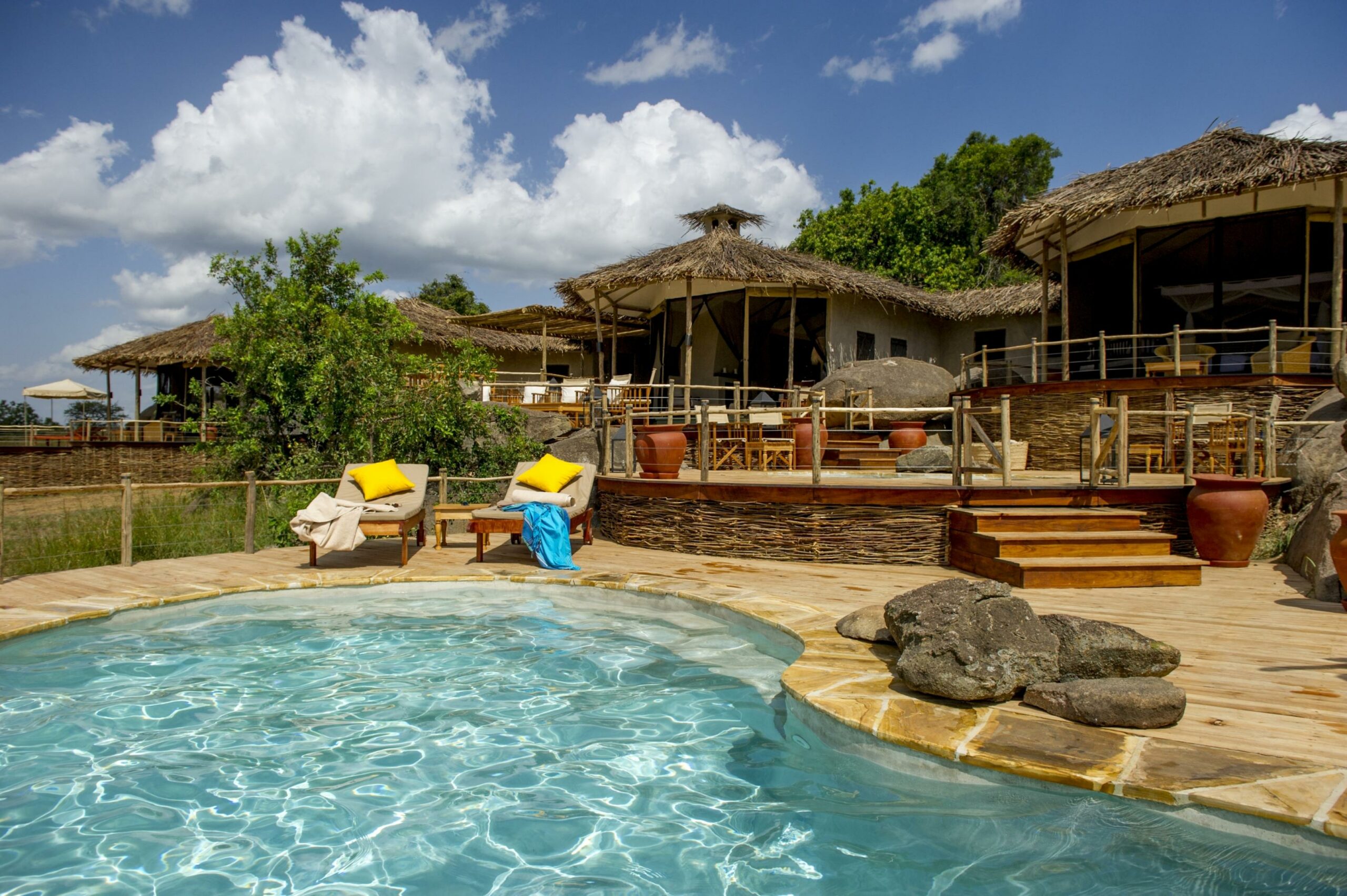
3. Jabali Private House
Serving up seclusion and sophistication amongst the glorious landscapes of Ruaha National Park, Jabali Private House is a wonderful accommodation for those seeking a luxurious stay during their safari adventure.
This spacious three-bedroomed accommodation features a lounge, dining area, private pool and marvellous views. It is another wonderful place to stay for those going on Tanzania safari tours as a family.
Ruaha is among the largest national parks in Tanzania and is a picture of beauty, with sun-bleached grassy plains and ancient baobab trees. What’s more, the area is known for its dense population of wild lions.
Prepare to be left in awe as you cross paths with large prides of these majestic felines during walking tours and game drives. Other animal residents include cheetahs, leopards and wild dogs. You’ll also want to turn your gaze to the skies from time to time to catch a glimpse of some of the area’s 570 bird species.
Enjoy complete freedom and flexibility during your stay, with your own private team of staff and personal safari guide and game-viewing vehicles. You will have the freedom to embark on adventures whenever you please, without being limited by the schedules of others.
This proves especially helpful for those travelling with young children as it can be difficult to anticipate when everyone will be ready. After the excitement of the day, return to the lush property for a spa treatment or a dip in the pool.
Alternatively, you can set off on another adventure with a night safari drive. Doing so offers a unique and exciting safari experience. A completely different range of animals will emerge as the nocturnal wildlife steps into action.
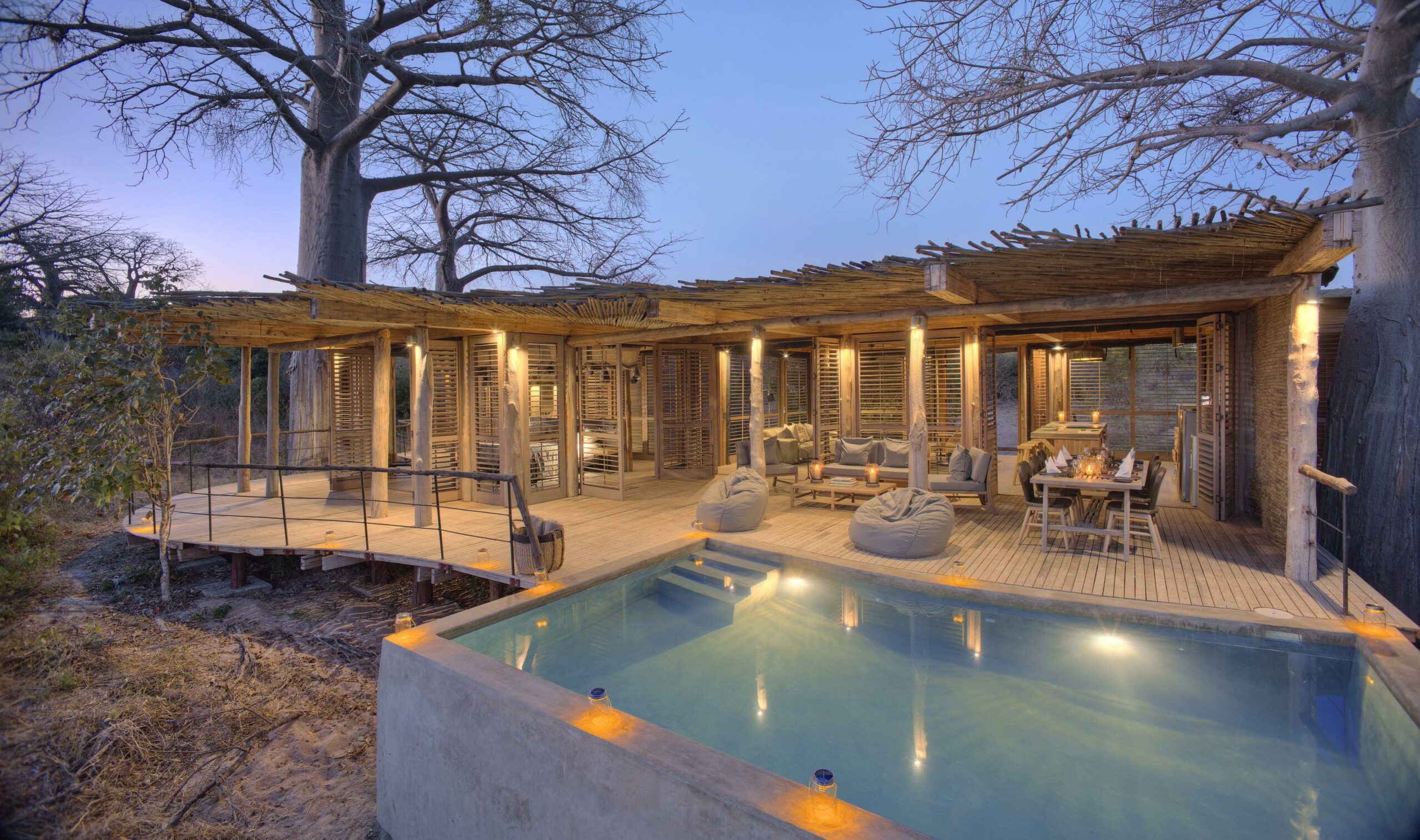
4. Chem Chem Lodge
Chem Chem Lodge is a fantastic place to stay for those on an African safari in Tanzania. This lavish eco-lodge is located in an incredible area: an elephant corner between the national parks of Lake Manyara and Tarangire.
The accommodation provides a Tanzania camping safari experience like no other, with sunrise hill climbs, helicopter excursions and hot air ballooning as just a few of the excursions on offer.
You will also be able to uncover the beauty of the landscape in the company of those who have lived there for centuries on a bush walk alongside a Maasai warrior. Prepare to be treated to glorious views during your stay, with spellbinding vistas over the palm-dappled plains available throughout the property.
If you’re looking for the best place to stay in Tanzania for families, you’ll be pleased to discover the child-friendly safari expeditions provided at Chem Chem Lodge. During these adventures, the little ones are invited to learn bush skills from Maasai warriors, meet the local wildlife and take part in cooking classes.
The accommodation itself is a tranquil oasis, with eight tented suites, a swimming pool, spa and gym facilities. Chem Chem Lodge lives and breathes the slow safari way of life, with a peaceful ambience and lots of opportunities for quiet moments of reflection.
Tarangire National Park is a spectacular destination to explore on a safari holiday in Tanzania. You’re likely to come across ancient baobabs, huge herds of elephants and river snakes during your visit.
Elephants are often seen migrating across the golden plains, while zebras, lions and antelopes also frequent the area. A tranquil patch of paradise nestled within an incredible wildlife haven, Chem Chem Lodge is an example of Tanzania safari accommodation at its finest.
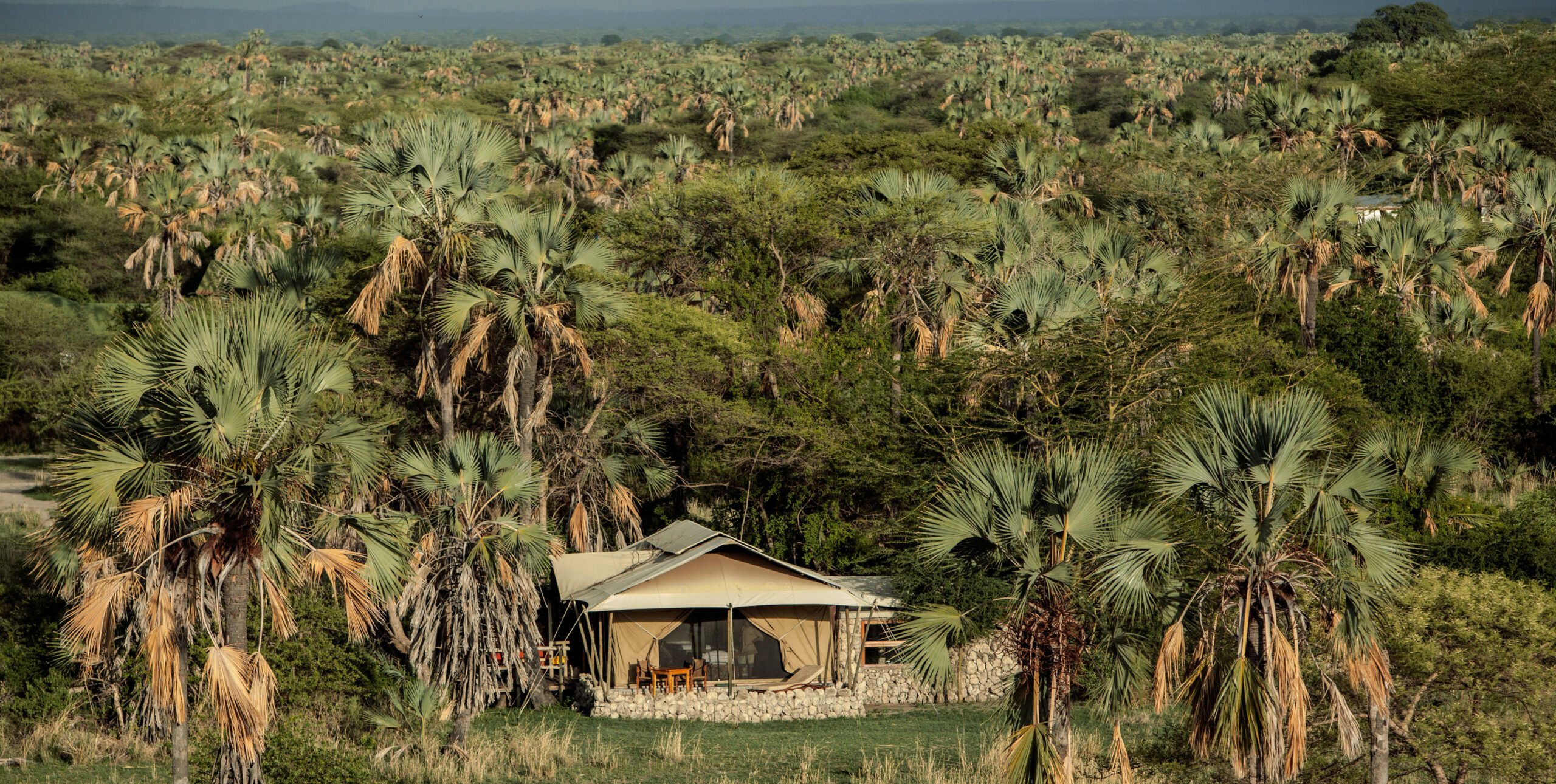
5. Greystoke Mahale
Seeking a safari and beach holiday in Tanzania? Look no further than Greystoke Mahale. The wonderful camp lies in a magical spot on the sandy shores of Lake Tanganyika, where crystal-clear waters rub shoulders with a flourishing forest.
Greystoke Mahale comprises six thatched open-fronted bandas with ensuite bathrooms and an upstairs relaxation deck. The design of the guest area is partly inspired by traditional Tongwe architecture and features a bar, dining area, library and cosy sitting areas.
The quirky rooms at the lodge showcase a charming rustic design, constructed from reclaimed dhow wood and featuring an idyllic thatched roof. Amidst these enchanting surroundings, you will feel a world away from the stresses of everyday life.
Without any road access, the only way to reach the camp is by floating up aboard a boat on its twinkling waters. Take in spectacular views over the lake and forested peaks along the way. Amongst the flourishing landscape of the lodge lies a dense population of wild chimpanzees.
Embark on the Tanzania safari of a lifetime, heading in to see these marvellous creatures in their natural habitat. After checking out the chimps, you can return for a kayak on the lake or a swim in the pools by the waterfalls.
You may also want to do some fishing during your stay or set off on a forest hike to see the area’s flourishing population of birds and butterflies. In the evening, sit down to an exquisite meal in the enchanting surroundings of Lake Tanganyika.
Then, head for a freshly-prepared cocktail at the open-air bar and listen to the landscape come alive with the sounds of the nocturnal animals.
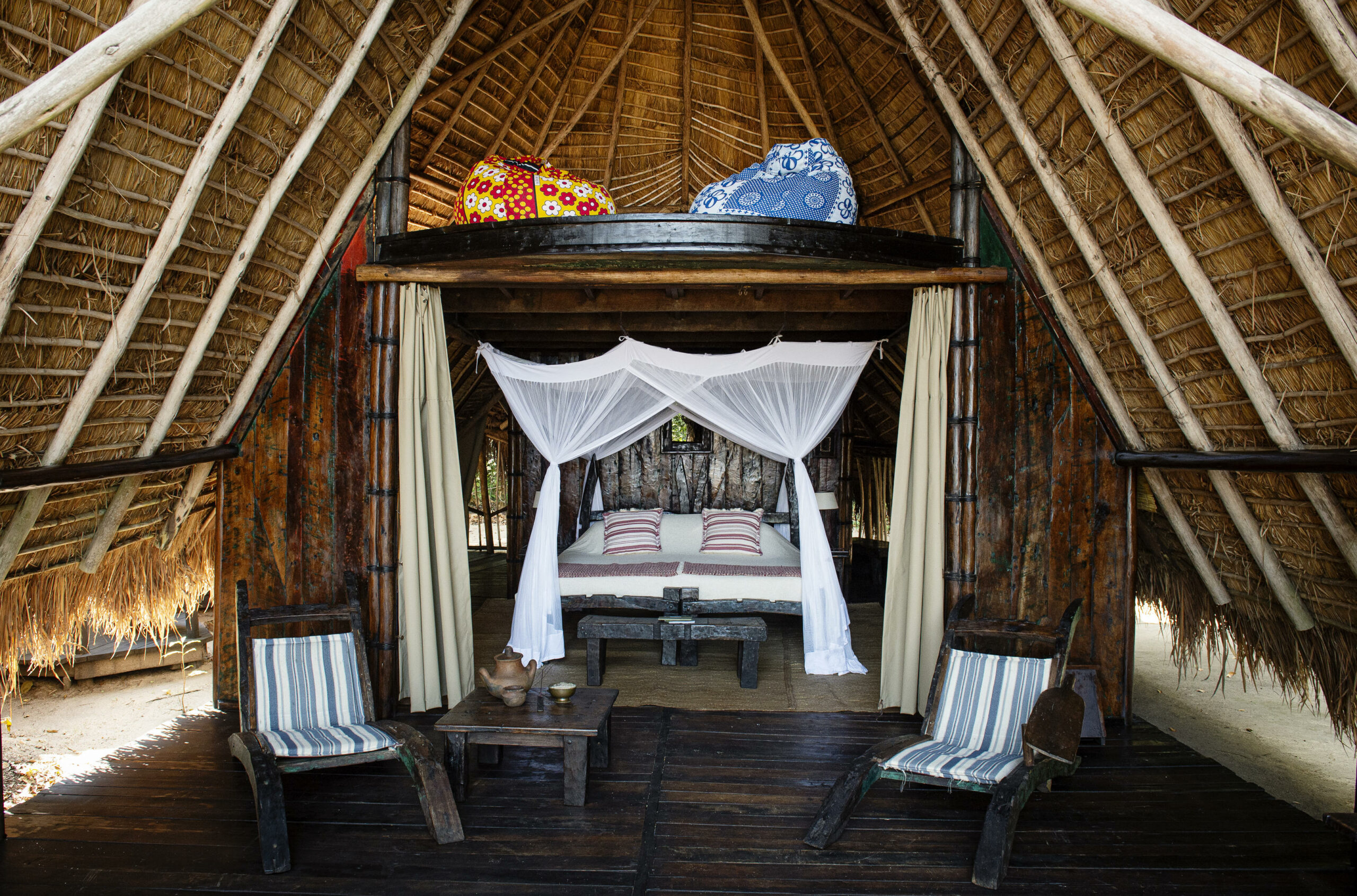
Summary
As you can see, there is a marvellous array of luxury safari accommodations in Tanzania. From lakeside bandas to exclusive-use homes, the variety of places to stay in the area is second to none. No matter where you choose to lay your head, prepare to enjoy the experience of a lifetime, encountering some of the planet’s most extraordinary creatures in this glorious unspoilt paradise.
Looking for a luxury Tanzania safari lodge for your African adventure? Check out our terrific range of safari experiences and accommodations in Tanzania, or get in touch with our experts at Coral Tree who can help you plan your dream trip to this magnificent corner of Africa.
Some images used in this blog are the property of our partners. Please contact us for more details.
The 3 Best Luxury Lodges Near Kruger National Park for Families
Take the kids on the adventure of a lifetime with a family holiday to Kruger National Park in northeastern South Africa. The glorious untamed landscape sprawls over 20,000 square kilometres and is an unspoilt tapestry of savannahs, woodlands and riverine forests.
Famed as one of the largest and most highly renowned game reserves in Africa, there are few better destinations to set off on a wildlife safari than Kruger National Park. The area is home to an exceptional array of species including lions, hippopotamuses and giraffes.
With so many magnificent creatures to see, exploring Kruger is sure to be an unforgettable experience for every member of the family, young and old, big and small. While the prospect of going on a wildlife safari in such a highly-renowned park is incredibly exciting, planning the holiday can seem a daunting task.
One important factor in planning a family safari trip is deciding where to stay with the little ones. To make the process as easy as possible for you, we have put together a list of the best safari lodges near Kruger National Park for families to stay.
Family Safaris Near Kruger National Park
Kruger National Park is one of the best places to go on a family safari in the world. Catching the wonder in your child’s eyes as they gaze over some of the world’s most glorious creatures in an awe-inspiring landscape is a truly heartwarming experience. Not to mention the little ones’ excitement as they track the prints of some of their favourite animals.
Even teenagers are sure to enjoy themselves on such a thrilling family holiday as they will have the incredible experience of spotting the biggest and best predators in the animal kingdom. Engaging in such special activities with your children creates a unique bond as you forge unforgettable memories together that will last a lifetime.
Kruger National Park is a particularly excellent place to embark on a family safari as all of the animal kingdom’s most iconic creatures thrive here. The park is home to over 12,000 elephants, 27,000 African buffalo and 2,800 lions and is regarded as one of the best places in the world to see a leopard.
What’s more, you’ll also find a phenomenal selection of luxury game lodges in greater Kruger National Park offering utmost comfort amidst the sensational landscape.
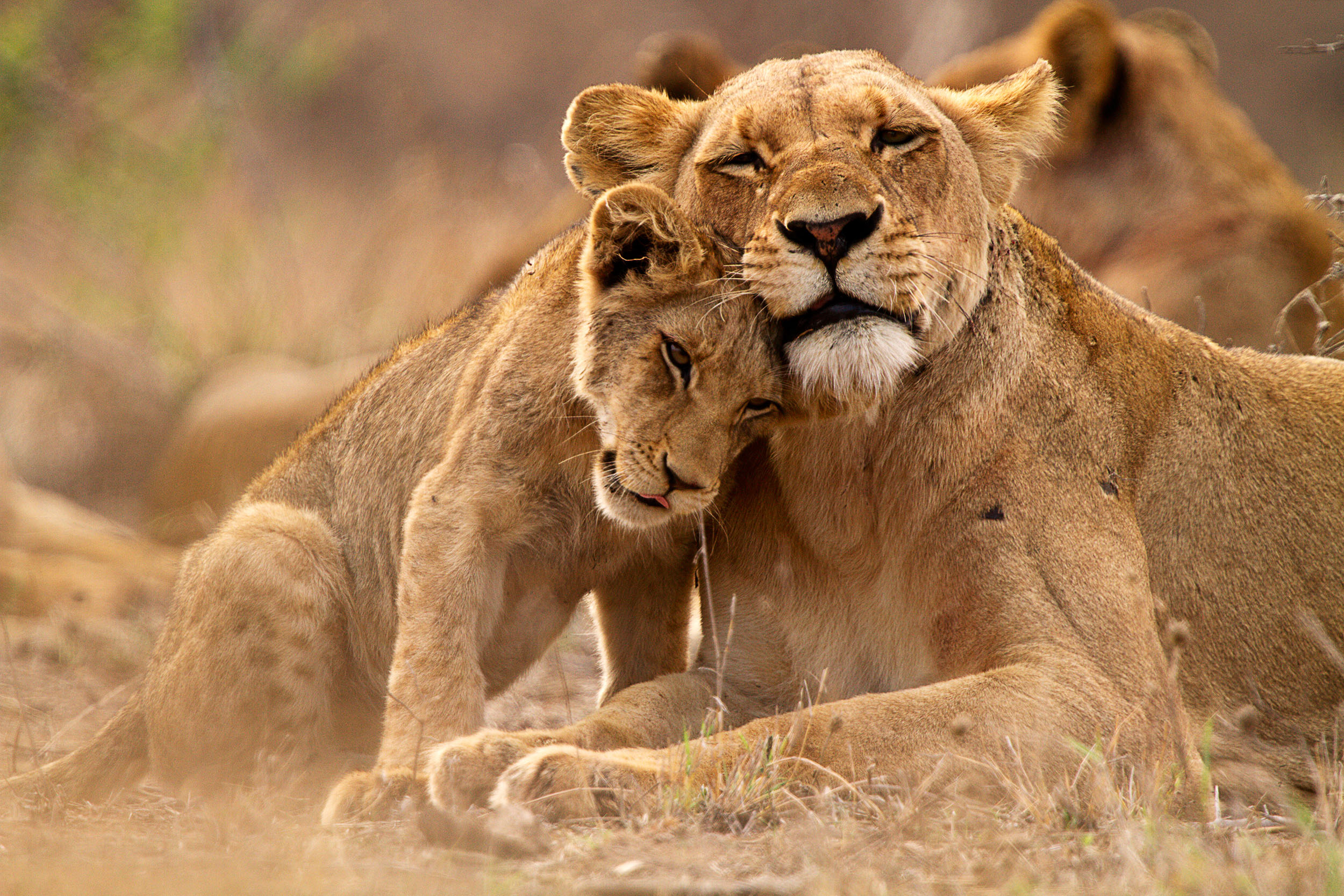
Best Time to Visit Greater Kruger National Park For Families
Timing is everything when it comes to organising a trip to Greater Kruger National Park with the kids. So, one of the first things to consider when putting together your itinerary is to consider the best time to go on a safari holiday according to your family’s needs and preferences.
The dry months of May to September can be a wonderful time to explore the marvellous landscape of Greater Kruger National Park. These months are South Africa’s winter season, when the animals often gather around the waterholes during this period, making them very easy to spot.
However, the flourishing vegetation and birdlife activity found between the summer months of November and February also offers great conditions for exploring the area. If you’re wanting the family to see the unspoilt landscape at its very quietest, you may alternatively opt to visit during the low season months of March and April.
The Best Luxury Lodges Near Kruger National Park for Families
We have gathered together some key information on some spectacular family-friendly accommodation options in the area. Consider this a map of the finest Greater Kruger safari lodges for you to check out during your stay.
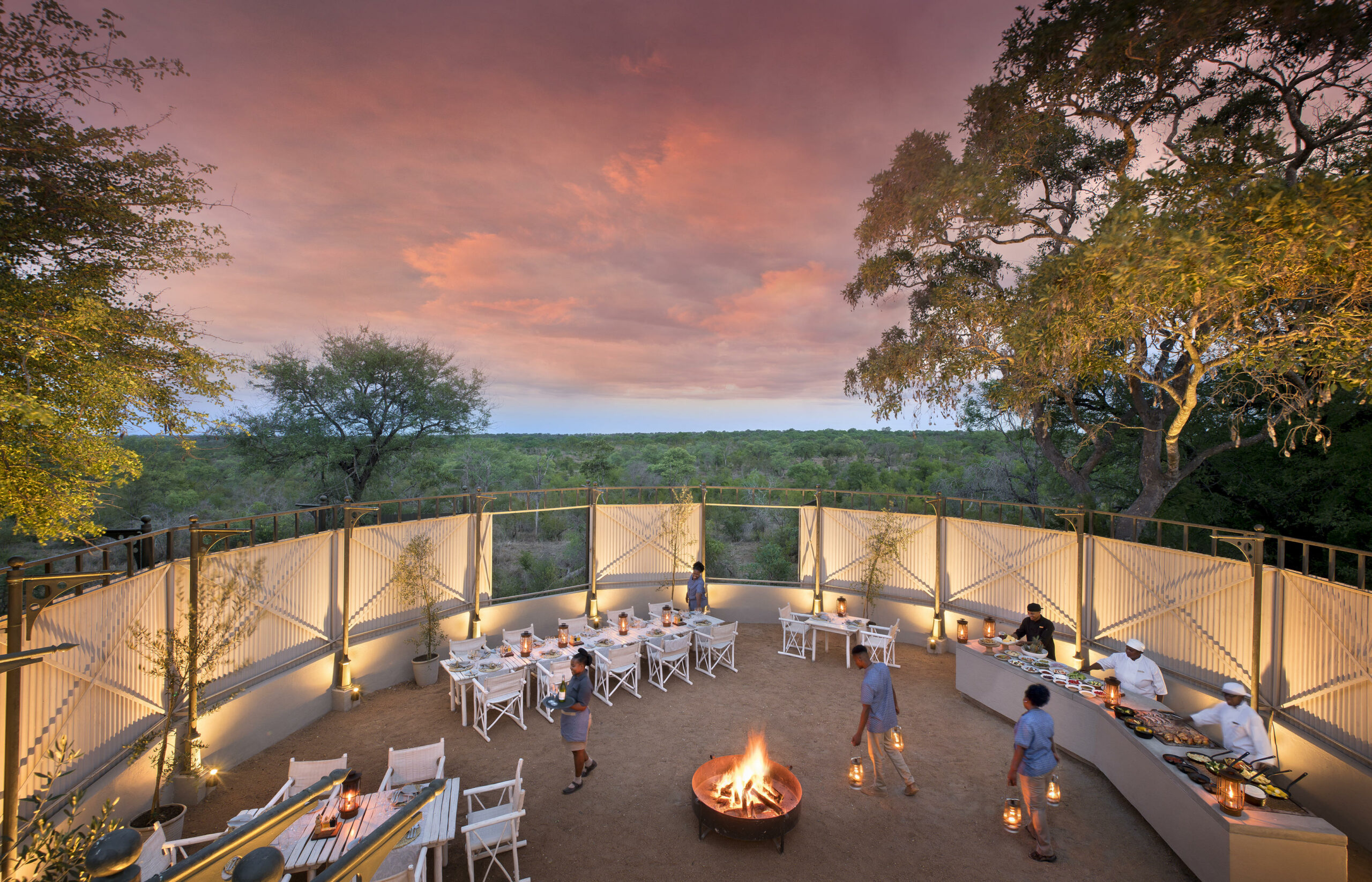
-
andBeyond Kirkman’s Kamp
Nestled within the glorious landscapes of the Sabi Sands Game Reserve, andBeyond Kirkman’s Kamp is one of the best luxury game lodges near Kruger National Park. The lush accommodation is located in one of the finest wildlife viewing spots in the whole of South Africa.
The lodge is home to twelve intimate cottages, each of which boasts magnificent views over the Sand River, an area renowned for its rich elephant population. When it comes to sleeping arrangements, families with children aged sixteen and below can opt for a triple room that offers plenty of space for all.
This is certainly one of the best luxury resorts near Kruger National Park for those wishing to be truly immersed in the wildlife of the area. The Sabi Sands Game Reserve in which the cottages lie shares an unfenced boundary with Kruger National Park.
As a consequence, the accommodation sees a constant stream of extraordinary creatures passing by, including cheetahs, lions and rhinos.
While the majesty of the landscape speaks for itself, the guides at andBeyond Kirkman’s Kamp have a special talent for conveying the distinctiveness of the area to young children. Little ones between the ages of three and twelve can take part in the WILDchild programme.
The activities of the children’s club vary depending on the season but can include everything from frog safaris to croquet and bug collecting to baking with the chefs in the kitchen. But don’t worry adults, you will be equally well cared for at this luxury lodge.
Unwind after a day of exploring the reserve with a dip in the on-site pool. Alternatively, you may wish to sustain the excitement with a tournament on the tennis courts. Teenagers and parents will also be able to go on walking tours and pamper themselves with wellness treatments.
With so many adult and child-friendly services on offer, it’s no wonder why andBeyond Kirkman’s Kamp is regarded as one of the best safari lodges in Kruger National Park.
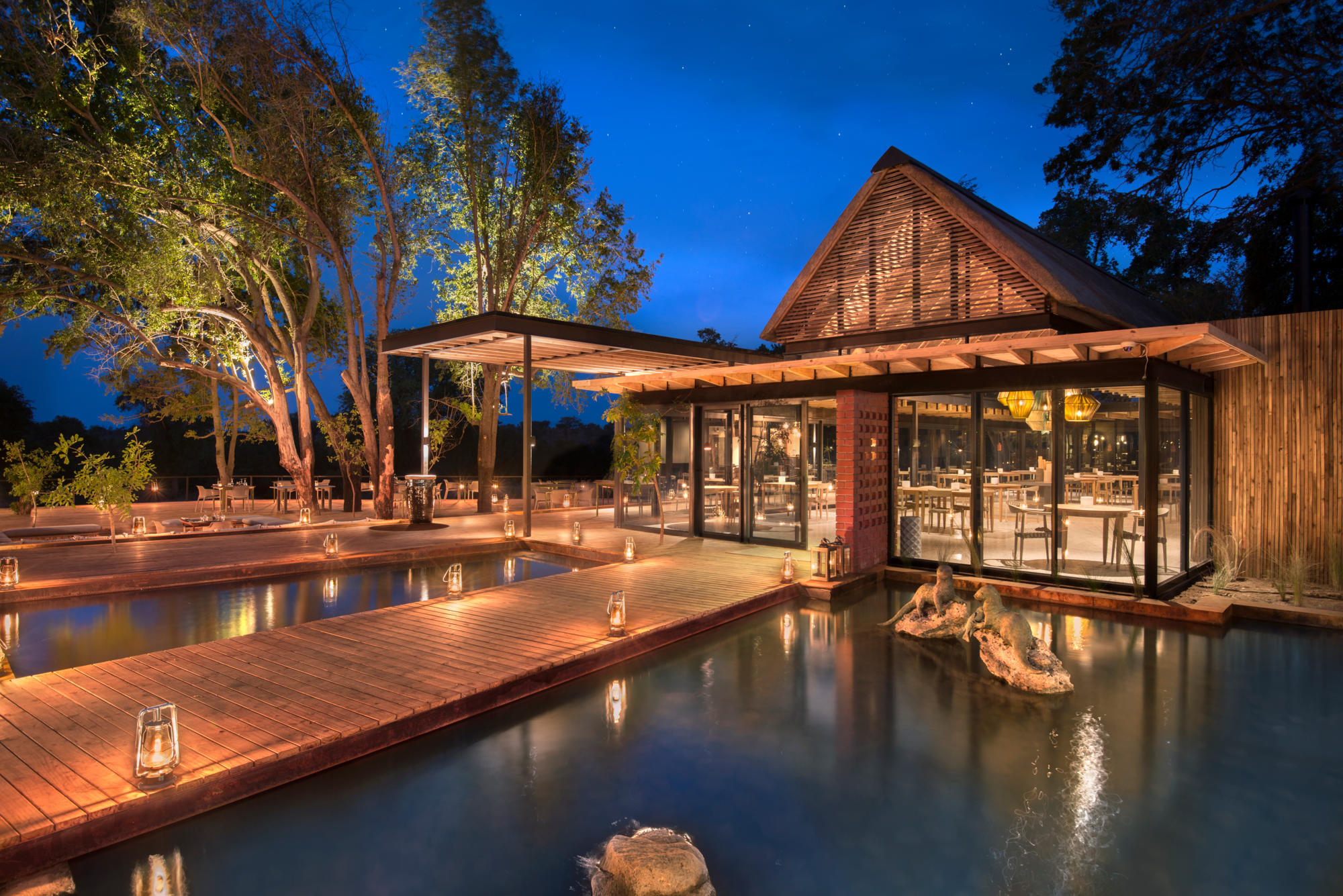
-
Lion Sands River Lodge
Lion Sands River Lodge is certainly one of the most incredible places to stay on a family safari to Kruger National Park. It offers the best of both worlds, serving up terrific wildlife sightings alongside a luxurious stay.
You will find this lodge in a stunning area of Sabi Sands Game Reserve. The site shares an unfenced border with Kruger National Park. So, a glorious array of creatures are constantly passing through the area as they roam freely between the protected areas.
The lodge itself delivers style and sophistication on the banks of a river. While this location offers stunning scenery, it also makes the accommodation better suited to families with older children, ten years and upwards. The lavish suites are soaked in natural light and exude a peaceful ambience.
The high thatched roof and rustic wooden accents provide a natural backdrop for the crisp-white furnishings, creating a stunning contrast. The sleek suites are exclusive and stylish, exuding a peaceful atmosphere with draped bedrooms and open seating areas, complete with a fireplace.
In the evenings, these tranquil communal areas offer an excellent place for families to relax and unwind. Throughout your stay, you and the family will be taken on daily safaris and guided walks to see the unique wildlife and landscapes of the area, including the Big Five.
Lion Sands River Lodge has dedicated childcare facilities and safari programmes to keep the little ones entertained. Upon returning from a wildlife adventure, you can refresh and rejuvenate in the on-site swimming pool, health centre or gym facility. Alternatively, you can let your hair down in the private lounge and bar.
However you choose to spend your time at the Lion Sands River Lodge, you’ll be left with no confusion as to why many view it as the best family accommodation in Kruger National Park. Its chic design serves up style and elegance, all the while remaining accessible and well-equipped for the little ones.
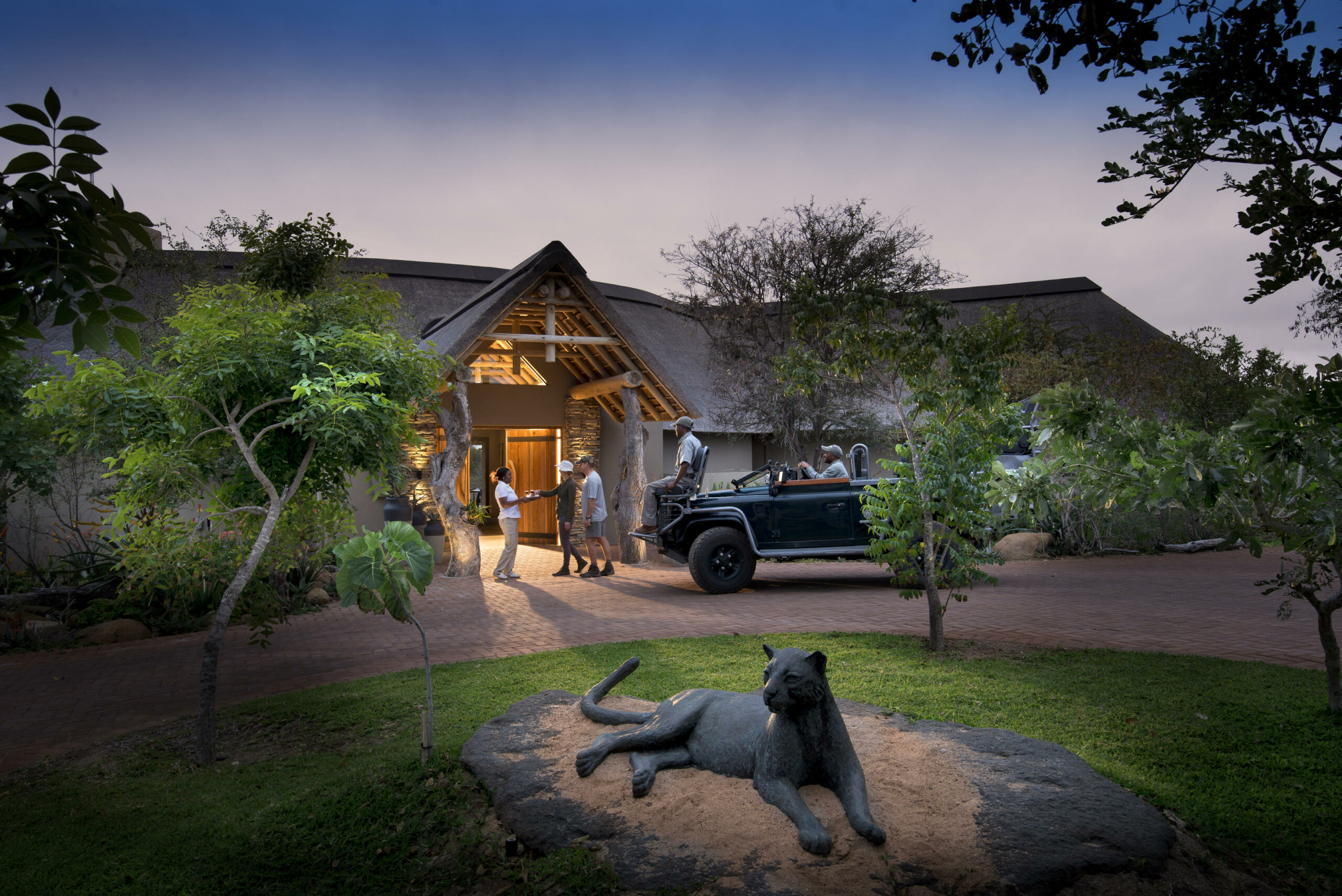
-
Rockfig Safari Lodge
Family-owned and run, Rockfig Safari Lodge is a fantastic place to stay near Kruger National Park with children. Its six plush suites offer a cosy, intimate ambience while the exceptional on-site service guarantees that your every need is taken care of.
Set out on bi-daily game drives to explore the surrounding landscape of the Timbavati Private Nature Reserve, which lies adjacent to Kruger National Park. Without any age restrictions for guests, any and all families are welcome at this lush establishment.
Timbavati Game Reserve is famed for its population of white lions and outstanding leopard sightings. Despite all of the incredible animals lying just a stone’s throw away from the accommodation, guests need not worry, as a protective fence encircles the establishment to prevent any unwanted intrusions!
Rockfig Safari Lodge’s design seamlessly merges indoor and outdoor spaces, resulting in a chic accommodation that perfectly complements the surrounding untamed landscape. Its chalet-like suites feature a stylish colour scheme inspired by the local birdlife and vegetation.
Notable features include indoor and outdoor showers, a private verandah and bespoke watercolour paintings. Another highlight is the glorious uninterrupted views over the Timbavati bushveld.
Yet, it’s not just the amenities that make this accommodation one of the best lodges near Kruger National Park. The accommodation provides terrific walking safaris during which you can enjoy the thrilling immersive experience of exploring Timbavati on foot.
Despite offering a thrilling experience, the tours are completely safe. You will be in the capable hands of expert rangers and trackers who will be constantly interpreting the animal tracks, signs and sounds around you. This experience can be enjoyed by children fourteen years and over.
Fret not if your little ones are too young for this. Your stay includes a private safari vehicle that gives you and your family the freedom to explore the area at your own pace, regardless of anyone’s age.
When it comes to dining, you can choose to eat in the stylish communal dining area with its long wooden table or in the seclusion of the private suites.
Summary
The glorious landscape of Kruger National Park represents a spectacular corner of the world where many of nature’s most unique and fascinating creatures roam free. With such a vast array of sensational wildlife to see, the area is a wonderful place to explore with children.
Every day of your safari is an opportunity for unforgettable family adventures, as you check off one incredible animal after the next on an epic holiday like no other. While the experience is made all the more special in the company of your children, this often makes the planning process take that much longer.
You may be concerned about the availability of kid-friendly activities, suitably sized suites or childminding services. Fortunately, there is an exceptional selection of luxury accommodations in Greater Kruger National Park that are fully equipped for your stay.
Discover an excellent range of family-friendly lodges in this untamed landscape, each offering its own unique blend of luxury and adventure. From glamorous safari camps where adults can unwind with spa treatments while kids go on bug-collecting expeditions, to sleek riverfront suites with children’s safari programs and babysitting services, there’s something here for everyone to enjoy.
Wanting to go on a family adventure to one of South Africa’s top wildlife destinations? Check out our brilliant range of lodges near Kruger National Park. Alternatively, get in contact with experts at Coral Tree to speed up the planning process. We have a fantastic range of safari experiences and packages to choose from.